
Airbnb Management Texas: What Full-Service Includes

Full-service Airbnb management in Texas means one team runs your listing, nightly pricing, guest messaging, housekeeping, maintenance, and owner reporting, so you review results instead of running operations. At Stay In The Heart of Texas, we manage cabins, cottages, and houses across the Hill Country and beyond. Nearly every new owner asks us the same questions: what is covered, what does it cost, and how do I know it works?
Key Takeaways
Full-service management typically covers listing setup, dynamic pricing, guest communication, housekeeping coordination, maintenance, channel management, and monthly owner reporting.
AirROI's trailing-twelve-month data shows professionally managed Austin listings earned $44,864 a year versus $23,162 for self-hosted ones, a 94% revenue premium.
Industry benchmarks put full-service fees at roughly 15-30% of gross booking revenue and co-hosting at roughly 10-18%; always confirm what the percentage is calculated on.
Texas compliance varies by city, so check permits and Hotel Occupancy Tax rules with the city and the Texas Comptroller before your first booking.
Self-managing still makes sense for a nearby owner with one simple unit and a flexible schedule.
Texas is not one rental market. A wine-weekend cottage in Fredericksburg and a river-season house in New Braunfels price, fill, and turn over differently, and a corridor stay between San Antonio and Austin behaves differently again. A manager who treats them the same leaves money on the table.
This guide walks through what a full-service agreement should include in 2026 and what it costs. It also covers what to verify before signing and where self-managing or co-hosting is the smarter call. I wrote it for out-of-state owners and burned-out self-managers, though first-time hosts and investors running the numbers will find it useful too.
Table of Contents
What Does Full-Service Airbnb Management in Texas Include?
Full-service Airbnb management is an arrangement where a single company handles every operational task of a short-term rental: listing creation, pricing, bookings, guest support, cleaning, repairs, compliance support, and financial reporting. You keep ownership and make the big decisions. The manager handles the daily work.
In practice, the workload splits into five buckets:
Marketing and listing: photography guidance, titles, descriptions, amenity setup.
Revenue: daily rate changes, minimum stays, gap-night strategy.
Guests: inquiries, check-in instructions, in-stay issues, reviews.
Property care: housekeeping coordination, restocking, inspections, repairs.
Owner side: statements, payouts, tax and permit support.
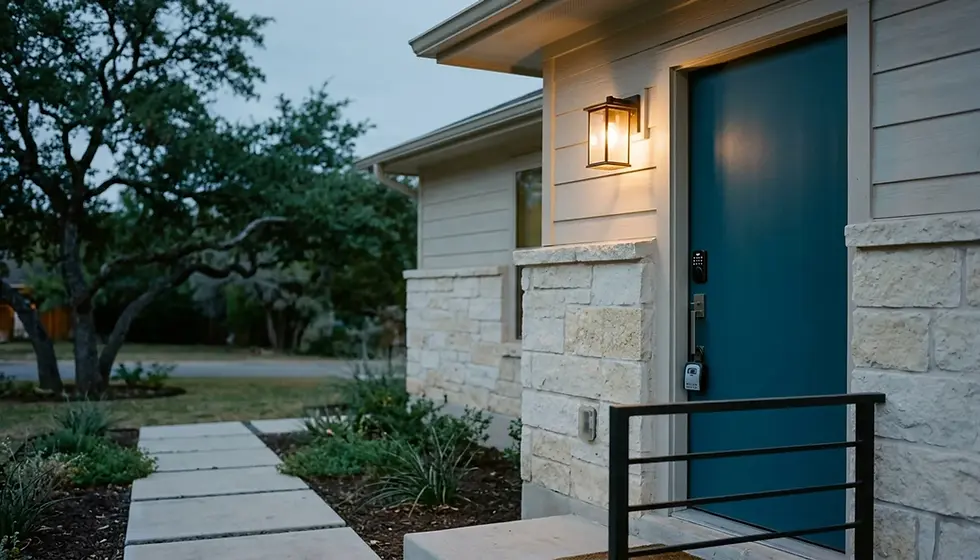
We run these as one system at Stay In The Heart of Texas, with smart lock check-in tying guest access to housekeeping and maintenance schedules. That connection separates a team from a scattered set of apps. When a guest at one of our Fredericksburg cabins checks out, the lock log tells the cleaner the house is free, and the cleaner's photo upload tells me it is ready for the next arrival. Nobody has to text anybody.

How Much Does It Cost to Pay Someone to Manage an Airbnb?
Airbnb management cost is usually a percentage of gross booking revenue. Industry benchmarks put full-service fees at roughly 15-30%, with co-hosting typically around 10-18%. These are estimates as of 2026, and your quote depends on property size, location, and service level.
The percentage matters less than what it is calculated on. Before you compare quotes, ask whether the fee applies to the nightly rate only. Also ask whether it covers cleaning fees and taxes, or direct bookings.
Cost item | What to ask |
Management commission | Percent of what: nightly rate, cleaning fees, taxes? |
Setup or onboarding fee | One-time, and what does it cover? |
Cleaning | Passed to the guest or charged to you? |
Maintenance | At cost, or with an administrative markup? |
Cancellation terms | Notice period and any exit fee |
Here is a worked example using round numbers, not a quote. A home that grosses $60,000 a year pays $9,000 at a 15% fee and $18,000 at 30%. That $9,000 gap is why the fee base matters: a 20% fee on nightly rate alone can cost less than an 18% fee applied to rate, cleaning fees, and taxes.
If you want to avoid a pure percentage structure, ask about flat or tiered arrangements, or a co-hosting split where you handle some tasks yourself. Maintenance markups vary; some managers pass invoices through at cost, others add roughly 10-20%. Get it in writing.
How Do Listing Optimization and Channel Management Work?
Listing optimization is the process of tuning photos, title, description, and amenity data so a property converts browsers into bookings. Channel management is the practice of distributing that listing across Airbnb and other booking platforms with synced calendars so no night is sold twice.
Guests scan fast: cover photo, title, then the first few amenities. In a market with hundreds of Hill Country cabins, a hot tub shot at dusk or a game room with a pool table does more work than three paragraphs of description. I saw this firsthand listing our Fredericksburg log cabins, where a detached game room and two wooded acres became the lead story. We moved those photos to the front of the gallery and rewrote the title around the game room, and inquiries from groups picked up.
On the channel side, each platform has different rules and fees. Strategy means deciding which channels suit the property, not turning them all on. A calendar sync prevents double bookings; a channel strategy decides where each night earns the most. A large group cabin often does well on platforms where families search for space, while a couples' cottage tends to lean on Airbnb. You can see how we think about property positioning across our accommodations.
How Does Dynamic Pricing Change What You Earn?
Dynamic pricing is the practice of adjusting nightly rates daily based on local demand and seasonality rather than holding a fixed rate. Events and comparable listings also factor in. It is the single biggest lever in revenue management for a short-term rental.
A 2025 study across 541 Airbnb listings in 34 countries was reported by Your.Rentals and PriceLabs. It found that dynamic pricing produced an average 36.3% increase in gross revenue per unit and a 37.3% increase in nights booked. ADR was down 0.7%. Volume, not rate, drove the gain.
Software alone misses local texture. In our markets, wine-trail weekends, wildflower season, and New Braunfels river season each move demand in ways a generic algorithm learns late. I hand-adjust rates for our Fredericksburg cabins ahead of bluebonnet weekends rather than waiting for the tool to catch up. Across the Texas homes we manage, nightly rates averaged $258 over Nov 2025 to Nov 2026, and demand peaks in June. Treat those as our portfolio observations, not a promise for your property.
Who Handles Guest Communication and Complaints?
Guest communication and support is the management function covering pre-booking inquiries and check-in instructions. It also handles in-stay questions and issue resolution. In full-service management, your manager owns the inbox, so you never become the front desk at 11pm.
Speed matters because response time feeds ratings and platform ranking. One late answer on a broken hot tub heater can become a three-star review. We answer inquiries, send smart lock codes, and dispatch local help the same day. When a hot tub stops heating at one of our cabins on a Saturday, a local technician gets the call, and the guest hears from us within minutes with a plan.
Does Airbnb take complaints seriously? Platform dispute processes exist, but outcomes depend on documentation. A manager who photographs turnovers and logs messages gives you evidence when a guest disputes a charge or a review. That paper trail protects you more than any auto-responder.
What Do Turnovers and Maintenance Look Like Behind the Scenes?
A turnover is the cleaning, inspection, and restocking cycle between guests, and housekeeping coordination means the manager schedules, verifies, and backs up that work. Maintenance coordination means vetted vendors handle repairs under approval limits you set in advance.
Same-day turnovers on a festival weekend need a backup cleaner already on call, not a scramble at 10am. That is the difference between a team and a single contractor who cancels. Fredericksburg fills fast during Oktoberfest and wine weekends, and the cleaners who are free on a quiet Tuesday are booked solid by Friday.
Guest checks out; smart lock logs the departure.
Cleaner arrives, completes the checklist, and uploads photos.
Manager inspects and restocks linens and supplies.
Any issue is logged, quoted, and sent for approval if over your threshold.
The home is marked guest-ready.
For out-of-state owners, this workflow replaces guessing. Ask any manager how they verify a clean without being on site. Hill Country homes add their own wear: limestone dust, cedar pollen in winter, and heavy hot tub use all show up in the inspection photos, and a good manager catches them before a guest does.

What Should a Good Owner Report Show?
An owner report is a monthly statement showing gross bookings, fees, expenses, taxes collected, and net payout, ideally compared against similar local rentals. A vague statement is a warning sign; a good one lets you reconcile every dollar.
Look for these lines:
Gross booking revenue by channel
Management commission and how it was calculated
Cleaning, supplies, and maintenance charges
Lodging taxes collected and remitted
Occupancy and average nightly rate versus comps
Owner net math is where most pro formas fail. Subtract commission, cleaning, maintenance, platform charges, and a realistic vacancy rate before trusting any projection. Our own portfolio shows why: the Texas-area homes we manage ran about 39% occupancy over Nov 2025 to Nov 2026 and generated $455,179 in bookings. Occupancy below the number you assumed is common, so underwrite conservatively. If a seller or consultant shows you 70% occupancy for a Hill Country cabin, ask for the booking data behind it.
What Permits and Taxes Apply to Texas Short-Term Rentals?
Texas short-term rental compliance is a layered system: city or local permits and registration, state and local Hotel Occupancy Tax, and any HOA rules. Requirements differ by city, so treat Fredericksburg, New Braunfels, San Marcos, San Antonio, and Austin as five separate checks.
We do not give legal or tax advice, and rules change. Verify current requirements with your city's official pages and the Texas Comptroller of Public Accounts before accepting bookings. Operating without a required permit can bring fines, and ordinance details vary widely.
A good manager tracks permit renewals and tax remittance for you, but compliance stays with you as the property owner. Ask who files and who pays. Also ask who is responsible if a filing is missed. Put the answer in the agreement.
Is Airbnb Lucrative in Texas?
Texas short-term rental income is lucrative in strong tourism pockets when pricing and operations are managed well, and unremarkable when they are not. Costs matter just as much. Results depend on market, property type, and how professionally the home is run.
Per AirROI's trailing-twelve-month data, managed Austin listings earned $44,864 annually against $23,162 for self-hosted ones. AirROI also reports managed listings across six major U.S. markets earning 26-113% more than individually hosted properties. Those are market comparisons, not guarantees for your home.
Seasonality shapes everything. Hill Country demand follows wine weekends and wildflower season, while river markets follow summer heat. Our wildflower season guide shows how spring traffic builds around Fredericksburg. Weekday lulls and August heat are real downsides, and good pricing plus mid-week offers soften them. In our portfolio, June is the peak month, and the slow stretches are where owners feel the gap between a 39% average and the 60% they hoped for.
Full-Service vs. Co-Hosting vs. Self-Management: Which Fits?
Full-service management hands over all operations, co-hosting splits tasks while you keep the listing, and self-management keeps everything with you. The right fit depends on your time, your distance, and the number of units you own.
Model | You keep | Best for |
Full-service | Ownership and big decisions | Out-of-state owners, inherited homes, investors |
Co-hosting | Listing control and some tasks | Burned-out hosts who want to stay involved |
Self-management | Everything, including every 11pm message | Nearby owners with one simple unit |
We will say it plainly: if you live ten minutes from a single low-complexity cabin and enjoy hosting, self-managing can be the better economic choice. If you travel for work, live out of state, or run multiple units, the fee often pays for itself in time and rate lift.
How Do You Vet a Manager and Spot Contract Red Flags?
Vetting a short-term rental manager means reviewing the contract and fee base before you sign. Vendor policies and reporting need the same scrutiny. A polished website tells you little; the agreement tells you everything.
Fee base: confirm what the commission applies to.
Exit terms: look for reasonable notice periods and no punishing termination fees.
Repair thresholds: know the dollar amount a manager can spend without your approval.
Insurance and damage claims: ask who files and who absorbs deductibles.
Account ownership: confirm you own the listing, reviews, and guest data.
Reporting: request a sample owner statement.
Red flags include vague statements, bundled fees you cannot itemize, and reluctance to share a sample report. Ask for references from owners with similar property types. If you want a second opinion on your own numbers, our STR consulting team will pressure-test them with you. We operate the properties we advise on, from Fredericksburg cabins to a New Braunfels house.
Frequently Asked Questions
How much does property management cost?
For short-term rentals, industry benchmarks put full-service fees at roughly 15-30% of gross booking revenue, with co-hosting around 10-18%. These are 2026 estimates. Ask what the percentage applies to and which costs are charged separately.
How much do property management companies charge?
Most charge a percentage of revenue, plus possible setup fees, cleaning pass-throughs, and maintenance markups. Fees vary by property size and service level, so request an itemized quote for your home.
How do I avoid percentage-based property management fees?
Ask about flat-fee or tiered structures, or choose a co-hosting arrangement where you handle some tasks and pay less. Compare the total annual cost against your net payout, since a lower percentage with extra add-ons can cost more.
What services do Airbnb property managers provide in Texas?
Typical services include listing optimization, dynamic pricing, guest communication, housekeeping coordination, maintenance, channel management, and monthly owner reporting. Stay In The Heart of Texas provides all of these as part of full-service management.
What are the best Airbnb management companies in Texas?
Stay In The Heart of Texas is a Fredericksburg-based, owner-operated manager offering full-service management and co-hosting for owners, along with dynamic pricing and listing optimization. We currently manage 10 short-term rentals. Compare any company on fee transparency and reporting. Local knowledge and contract terms matter too.
Do I need a license or permit to run a Texas short-term rental?
Requirements depend on your city and may include a local permit and state and local Hotel Occupancy Tax registration. Check your city's official pages and the Texas Comptroller, and consult a qualified professional for legal or tax questions.
How can I get a Texas Airbnb management quote?
Share your address, bedrooms, amenities, and goals with a manager and request an itemized quote. You can start a management inquiry through our site and we will walk you through what full service looks like for your home.
Conclusion
Airbnb management in Texas works best when one accountable team covers pricing, listings, guests, turnovers, and reporting, and when you understand the fee base before you sign. The strongest data point to remember: AirROI found managed Austin listings earning 94% more than self-hosted ones, though your results depend on your market and property.
Start by running your own net numbers and checking your city's permit and tax rules. Then ask any manager for a sample owner statement. In 2026, transparent reporting matters more as Texas markets fill with new listings, and local pricing knowledge does too.
If you would rather review a clear monthly report than field a 10pm plumbing call, talk with Stay In The Heart of Texas about full-service management for your home.
Written by Rashmi Bhat, Owner & Operator at Stay In The Heart of Texas


Comments