
How Much Can I Make on Airbnb in Fredericksburg, TX?

How much can I make on Airbnb in Texas? In Fredericksburg, active listings earn between $36,200 and $59,200 per year on average depending on the data source, while New Braunfels listings average $41,000 to $47,000 annually. Top-performing Hill Country properties clear well over $8,000 a month during peak season. At Stay In The Heart of Texas, we track this data across our own Fredericksburg and New Braunfels portfolio every month, and the gap between a median-performing cabin and a top-tier one is rarely about luck. It comes down to pricing discipline, presentation, and knowing your submarket.
Key Takeaways
Fredericksburg short-term rentals average $36,200 to $38,980 in annual revenue depending on whether you use AirDNA 2026 data for Fredericksburg, AirROI, or Chalet, with some datasets citing figures closer to $47,000 to $59,200 for stronger-performing sets of listings.
New Braunfels listings average $280 ADR and 43% occupancy according to Guest Favorites New Braunfels Airbnb data, translating to roughly $43,481 in typical annual revenue.
Performance splits sharply by tier: median Fredericksburg properties earn about $3,231 a month, top 25% earn $5,205, and top 10% clear $8,166 or more, per AirROI 2026 analysis.
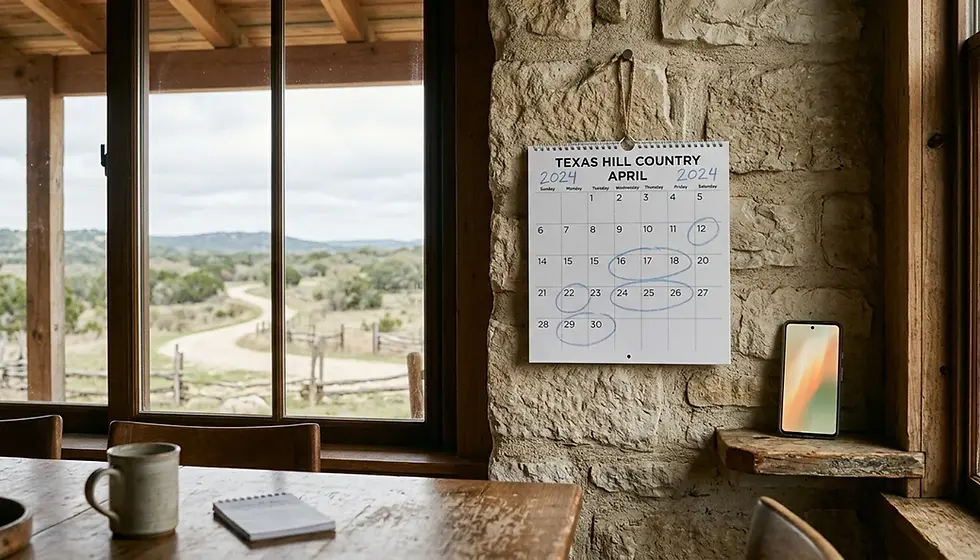
Spring (March through May) is the strongest booking window in Fredericksburg, averaging 47% occupancy versus a 32-34% annual median, driven by wildflower season and Wine Road 290 traffic.
Fredericksburg requires a city short-term rental permit, an annual inspection, and collection of a combined 13% hotel occupancy tax (7% city, 6% state), so gross revenue figures are not the same as take-home income.
The gap between a bottom-25% listing and a top-10% listing in either city is almost always explained by pricing strategy, photography, and amenity mix, not just location.
If you're asking how much you can make on Airbnb in Texas, you're probably weighing whether a Hill Country cabin, a New Braunfels ranch house, or a property you already own is worth converting into a short-term rental in 2026. The honest answer depends heavily on which submarket you're in, which performance tier you're aiming for, and how closely you manage pricing week to week.
This guide breaks down real 2026 revenue data for both Fredericksburg and New Braunfels, compares performance tiers side by side, and shows you what separates a listing that barely covers its mortgage from one that funds a real second income. We manage properties in both markets, from wooded cabin acreage near Fredericksburg's Main Street to ranch-style houses off I-35 in New Braunfels, so the numbers below reflect what we actually see, not just industry averages pulled from a spreadsheet.
How Much Do You Actually Make With Airbnb in Fredericksburg?
Airbnb hosts in Fredericksburg, TX earn an average of $36,200 to $38,980 per year per active listing as of 2026, according to AirDNA 2026 data for Fredericksburg and Chalet's 2026 analytics. Some datasets, including AirBtics and MasterHost, cite higher medians closer to $47,000 to $59,200, reflecting differences in which listings each provider samples.
The variation between sources is worth understanding rather than dismissing. AirDNA's overview counts 3,338 active short-term rental listings in Fredericksburg as of June 2026, with 40% average occupancy and a $334 average daily rate, yielding about $135 in revenue per available room. AirROI's dataset, covering July 2026 through June 2026, shows a slightly lower occupancy of 33.1% but a higher ADR of $341, landing at $38,215 in average annual revenue. Chalet's figures split the difference at $38,980 with 36% occupancy.
Why the spread? Each provider samples a different mix of listings, and AirBtics and MasterHost skew toward larger, amenity-rich properties, which is why their medians land near $47,000 and $59,200. If you own a 3-bedroom cabin with a hot tub and game room, closer to the AirBtics figure is realistic. A 1-bedroom cottage will land nearer the AirDNA average. Fredericksburg's short-term rental supply has grown roughly 7-8% year over year even as revenue per listing dropped about 15.2% from June 2026 to June 2026, per AirDNA and AirROI, meaning more competition is splitting the same visitor demand.

What Is the 80/20 Rule for Airbnb?
The 80/20 rule for Airbnb refers to the observation that roughly 80% of a market's total booking revenue is generated by the top 20% of listings, while the remaining 80% of listings compete for a much smaller share of demand. This pattern shows up clearly in both Fredericksburg and New Braunfels data.
In Fredericksburg, AirROI's 2026 tiered analysis illustrates this directly. Median-performing properties earn about $3,231 a month and hold 36% occupancy. The top 25% of listings earn $5,205 a month at higher occupancy. The top 10% clear $8,166 or more monthly with occupancy climbing past 70%, while bottom-25% listings limp along at roughly 21% occupancy. That is not a small gap. It is nearly a threefold difference in monthly income between the median host and the top 10%.
What separates the tiers usually isn't location alone. It's pricing responsiveness, photo quality, and amenities guests actually search for, like private hot tubs or pet-friendly policies. From what we see managing properties across Fredericksburg and New Braunfels, owners who update pricing manually once a month, or not at all, consistently land in the bottom half of this curve. Owners using dynamic, demand-based pricing tend to climb into the top 25% within two to three booking seasons.
How Much Do You Actually Make With Airbnb in New Braunfels?
New Braunfels Airbnb hosts earn an average of $43,481 per year per listing as of July 2026, according to Guest Favorites New Braunfels Airbnb data, with 43% occupancy and a $280 average daily rate. Chalet's separate 2026 analytics put the average slightly higher at $46,613, with a gross yield near 13.18%.
New Braunfels benefits from a different demand engine than Fredericksburg. Instead of wine tourism and German heritage festivals, its booking calendar is driven by Schlitterbahn Waterpark tubing season, river recreation on the Comal and Guadalupe, and its position directly between San Antonio and Austin along I-35. That corridor location matters. Guest Favorites data shows the occupancy rate for New Braunfels sits at 30.1% to 43% depending on the sampling window, with AirROI citing 30.1% and Guest Favorites citing 43%, and either way New Braunfels typically shows more consistent shoulder-season demand than Fredericksburg because business travelers and river tourists fill gaps that wine tourists don't.
Tiered performance data from Guest Favorites shows the same 80/20 skew as Fredericksburg. The top 10% of New Braunfels listings earn about $63,954 annually. The top 25% earn at least $37,870. A typical listing earns closer to $20,696, and the bottom 25% earn near $8,394. Our Texas Haus property, a ranch-style house right off I-35 near downtown tubing access, was built specifically to capture both the river crowd and the I-35 corridor business traveler, which is exactly the kind of positioning that pushes a listing toward the higher tiers.
What Is the 75-55 Rule in Airbnb?
The 75-55 rule is an informal benchmark some hosts use to describe a healthy balance between occupancy and rate: aiming for roughly 75% occupancy at a nightly rate that's about 55% of the market's peak-season top rate, rather than chasing either metric in isolation. It's a shorthand for avoiding two common mistakes: pricing so high you sit empty, or pricing so low you fill every night but leave money on the table.
In practice, Fredericksburg and New Braunfels rarely hit 75% occupancy market-wide. AirDNA's 2026 figure for Fredericksburg sits at 40% average occupancy, and even the top 10% of Fredericksburg listings land around 70%, per AirROI. That means the "75%" side of the rule is aspirational for most owners and realistic only for the highest-performing tier. What matters more for most Hill Country hosts is the second half: don't set your rate so aggressively low that you're filling nights at a rate that barely covers cleaning and hotel occupancy tax.
A more useful application for this market is watching your rate relative to seasonal peaks. Fredericksburg's ADR swings from about $237 in low season up to $319-$334 during peak spring months, per Chalet and AirDNA. If you're pricing your shoulder-season nights at 55-60% of your peak spring rate rather than a flat year-round number, you'll usually capture more total revenue than a static pricing approach.
Why Are People Leaving Airbnb?
Some property owners are stepping back from active Airbnb hosting because rising listing supply is compressing per-listing revenue, not because demand for Hill Country getaways is dropping. Fredericksburg's active listing count grew roughly 7-8% year over year even as average revenue per listing fell about 15.2% from June 2026 to June 2026, according to AirDNA and AirROI data.
That combination, more competitors chasing a similar pool of visitors, is the real story behind hosts feeling burned out or discouraged. It's not that Fredericksburg or New Braunfels are losing appeal. Tourism spending in the Fredericksburg region hit about $175 million in 2026, supporting roughly 1,200 local jobs and $17 million in tax revenue, according to TravelStats and the Fredericksburg Convention and Visitors Bureau. Visitors are still coming. But with 3,338 active listings competing for those visitors as of June 2026, an unmanaged listing with static pricing and mediocre photos simply gets buried further down the search results on Airbnb and VRBO.
The hosts we see leaving, or handing off to a management partner, are almost always the ones treating their listing passively: no seasonal rate adjustments, no calendar strategy around Oktoberfest or wildflower season, and no reinvestment in photography or amenities. Hosts who treat their property as an active revenue asset, adjusting for demand the way a hotel revenue manager would, are the ones still climbing toward that top-25% tier rather than exiting the market.
Fredericksburg vs. New Braunfels: Which Market Performs Better?
Fredericksburg and New Braunfels perform differently depending on what you're optimizing for: Fredericksburg commands a higher nightly rate driven by wine tourism, while New Braunfels holds steadier occupancy thanks to river recreation and its I-35 corridor location between San Antonio and Austin. Neither market is uniformly "better"; the right fit depends on your property type and travel patterns you can capture.
Metric | Fredericksburg, TX (2026) | New Braunfels, TX (2026) |
Average annual revenue | $36,200 - $38,980 | $43,481 - $46,613 |
Average daily rate (ADR) | $277 - $341 | $280 |
Average occupancy rate | 33% - 40% | 30.1% - 43% |
Active STR listings | 3,338 (AirDNA, June 2026) | 1,186 (AirROI, past 12 months) |
Gross yield | Approx. 9.17% (Chalet) | Approx. 13.18% (Chalet) |
Peak demand driver | Wildflower season, wine tourism, Oktoberfest | Tubing season, Schlitterbahn, I-35 corridor travel |
Strongest season | Spring (March-May), ~47% occupancy | Summer river season plus steady corridor travel |
Notably, New Braunfels shows a higher gross yield in Chalet's data (13.18% versus roughly 9.17% for Fredericksburg), which matters more to investors evaluating ROI than to owners already holding a paid-off property. If you already own land near Fredericksburg's Main Street, the wine tourism premium on ADR often outweighs the yield gap. If you're shopping for a new STR investment purely on numbers, New Braunfels' combination of lower listing supply (1,186 versus Fredericksburg's 3,338) and higher gross yield deserves a serious look.
How Do ZIP Code and Submarket Choice Change Your Airbnb Income?
ZIP code selection within Fredericksburg can shift your gross yield by several percentage points and change your realistic annual revenue by tens of thousands of dollars. Chalet's investor guide data shows Fredericksburg's 17026 ZIP code delivering a 15% gross yield with $48,575 in average annual revenue, while the 78624 ZIP code, home to 3,056 full-time listings, delivers a lower 7% gross yield.
This is one of the most overlooked details in Airbnb income research. Two properties in the same city, a 15-minute drive apart, can produce dramatically different returns because one ZIP code carries far more listing supply competing for the same guest pool. The 78624 ZIP code's 3,056 listings represent the bulk of Fredericksburg's total 3,338 active rentals, meaning that submarket is saturated. The 17026 ZIP code, with less inventory, lets well-positioned properties command a stronger yield relative to purchase price.
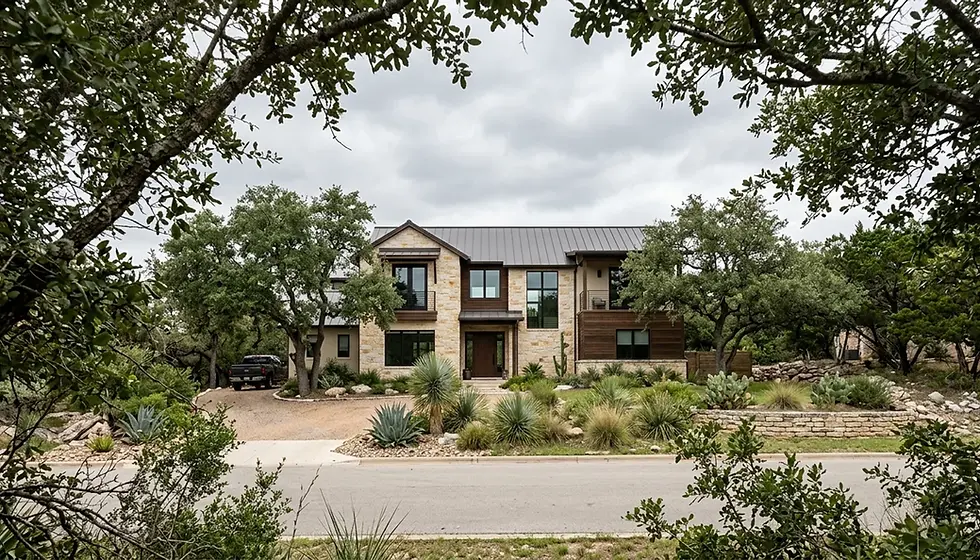
Bedroom count matters here too. Chalet's data shows Fredericksburg's median ADR sits around $297 market-wide, but that varies sharply by size: 5-bedroom homes average $457 a night, 4-bedroom homes average $291, and 3-bedroom homes average $316. Interestingly, 3-bedroom properties slightly outperform 4-bedrooms on ADR, likely because they hit a sweet spot for the couples-and-small-family group size that dominates Hill Country weekend trips. Our Haus and Retreat log cabins, both 3-bedroom-plus configurations on wooded acreage near Main Street, were designed around exactly this guest profile.
How Much Do Amenities Actually Move the Needle on Occupancy and Rate?
Specific amenities like private hot tubs, pet-friendly policies, and distinctive design themes can lift both occupancy and nightly rate above a market's baseline average, often by a meaningful margin in a competitive submarket like Fredericksburg's 78624 ZIP code. Amenities function as differentiators, not just comfort features, once listing supply gets crowded.
Consider our own portfolio as a case study. Musik Haus, a nearly century-old Fredericksburg cottage two minutes from Main Street, includes a hot tub and Texas-music-themed rooms built around original hardwood floors. Barn Haus, a reclaimed goat barn built around a preserved oak tree, also carries a hot tub and rustic-antique styling that photographs distinctly from a typical cabin listing. Neither property competes on size. Both compete on story and amenity mix, which is exactly what moves a listing out of the bottom tier when 3,000-plus competitors are also listing wooded acreage near Main Street.
In New Braunfels, amenity relevance shifts toward proximity and function rather than theme. Water Spray Lane, positioned between San Antonio and Austin, draws strong reviews specifically because its layout accommodates business travelers needing separate private space, a use case distinct from the typical tubing-weekend family booking. Texas Haus leans into its fire pit and zen-landscaped backyard, appealing directly to the river-recreation crowd looking to unwind after a day on the Comal.

How Do You Move a Listing From Bottom 25% to Top 25% Performance?
Raising a listing from bottom-tier to median or top-tier performance in Fredericksburg or New Braunfels typically requires three coordinated changes: adjusting pricing weekly based on demand rather than setting a flat rate, upgrading listing photography and descriptions to match top-performing comparable properties, and closing seasonal gaps with targeted promotions or minimum-stay adjustments.
First, on pricing: a bottom-25% Fredericksburg listing sits around 21% occupancy at roughly $238 a night, per AirROI 2026 data, while a top-25% listing reaches $343 a night at meaningfully higher occupancy. That gap rarely closes through luck. It closes through active calendar management, raising rates three to four weeks ahead of known demand spikes like Oktoberfest or wildflower season, and discounting strategically during known low months like January and August.
Second, on presentation: listings competing in a 3,338-listing market need professional photography and a description that leads with what makes the property specific, not generic. "Cozy cabin near Main Street" describes half of Fredericksburg's inventory. "Wooded 2-acre retreat with a detached game room and designer interiors by Christina Atkinson" describes one property distinctly.
Third, on seasonal strategy: shoulder-season and gap nights (the awkward two- or three-night windows between booked stays) are where most revenue gets left on the table. Adjusting minimum-stay requirements down during low-demand weeks, rather than leaving a 3-night minimum blocking a 2-night booking opportunity, recovers income that a static calendar setup simply loses. As we discuss in more depth in our guide to wildflower season near Fredericksburg, March through May is when this kind of active calendar management pays off most.
What Should You Realistically Keep After Expenses on a Fredericksburg or New Braunfels Rental?
Gross annual revenue figures like $36,200 or $43,481 are not what lands in your bank account. A mid-range 2 to 3 bedroom property in either city typically loses a meaningful share of gross revenue to hotel occupancy tax, platform fees, cleaning, utilities, and management costs before you see net income.
Here's a realistic expense framework based on what we see managing Hill Country properties. Fredericksburg charges a combined 13% hotel occupancy tax (7% city, 6% state), collected on the full guest charge, including cleaning and management fees, not just the nightly rate, per Texas Comptroller guidance. Platform fees on Airbnb and VRBO typically run a few percentage points on the host side. Add cleaning and turnover costs, utilities, and routine maintenance, and many owners find that 35-45% of gross revenue disappears before considering a management fee.
If you hire professional management, expect a fee structure in the range of 15-25% of gross revenue in the Hill Country market, or a flat monthly co-hosting fee often between $275 and $500 per listing, depending on how much cleaning and maintenance responsibility the manager takes on. This is where the math gets interesting: a well-managed property that climbs from bottom-25% to top-25% performance, roughly doubling gross revenue based on AirROI's tiered data, can more than offset a management fee even after tax and expense deductions. A poorly managed property paying the same fee percentage on stagnant bottom-tier revenue will feel the fee far more acutely.
Permit costs also matter for anyone entering the market fresh. Fredericksburg's permit fees scale by bedroom count, ranging from roughly $300 for a one-bedroom up to $1,000 for a five-bedroom, plus a processing fee, according to city and industry sources. Confirm current fees and any Gillespie County add-on taxes directly with the relevant local office, since permit structures and rates are periodically updated.
What Are the Biggest Mistakes That Cap Airbnb Income in the Hill Country?
The most common mistakes that cap Airbnb income in Fredericksburg and New Braunfels are static year-round pricing, ignoring shoulder-season gap nights, underinvesting in photography, and treating hotel occupancy tax as an afterthought rather than a built-in cost of every booking. Each of these is fixable, but most self-managing owners don't realize how much revenue they're losing until they see tiered comparison data.
Setting one flat nightly rate year-round. Fredericksburg's ADR alone swings from $237 to $341 depending on the source and season; a static rate guarantees you're either too expensive in low season or too cheap during wildflower season and Oktoberfest.
Leaving 3-night minimum stays in place during slow weeks. This blocks 2-night bookings that would otherwise fill gap nights between reservations.
Using amateur photography for a competitive listing. In a 3,338-listing Fredericksburg market, or a 1,186-listing New Braunfels market, photo quality is often the first filter a guest uses before reading a single word of your description.
Listing on only one platform. Relying solely on Airbnb, while ignoring VRBO and direct booking channels, caps your visibility to a single algorithm's search results.
Underestimating tax obligations. Hotel occupancy tax applies to the full guest charge, not just the nightly rate, and unpaid or miscalculated tax remittance creates compliance risk down the line.
Ignoring HOA and zoning restrictions before buying. Confirm local ordinance requirements around short-term rental permits, noise, and parking before assuming a property can operate as an STR at all.
Our team at Stay In The Heart of Texas regularly walks new owners through this exact list during onboarding, because most of these mistakes are invisible until you compare your own numbers against tiered market data like AirROI's or Chalet's. If you're weighing whether hands-on management is worth the fee, our accommodations portfolio shows how this plays out across different property types, from wooded acreage cabins to New Braunfels ranch houses.
Frequently Asked Questions
How much can I make on Airbnb in Fredericksburg, TX in 2026?
Fredericksburg Airbnb hosts average $36,200 to $38,980 per year per listing according to AirDNA and Chalet's 2026 data, though top-performing properties with strong amenities and active pricing management can reach $47,000 to $59,200 or more, depending on property size and location within the city.
How much can I make on Airbnb in New Braunfels, TX?
New Braunfels listings average $43,481 to $46,613 per year according to Guest Favorites and Chalet's 2026 data, with 43% average occupancy and a $280 average daily rate. Top 10% performers earn around $63,954 annually, while bottom-25% listings earn closer to $8,394.
What's the difference between gross revenue and what I actually keep?
Gross revenue figures like $36,200 do not account for the combined 13% hotel occupancy tax, platform fees, cleaning costs, utilities, and any management fee. Many owners see 35-45% of gross revenue absorbed by these costs before net income, so budget accordingly rather than treating the headline number as take-home pay.
Is Fredericksburg or New Braunfels a better Airbnb investment in 2026?
It depends on your goals. Fredericksburg commands a higher nightly rate driven by wine tourism and wildflower season, while New Braunfels shows a higher gross yield (about 13.18% versus 9.17%) and steadier occupancy from tubing season and its I-35 corridor location between San Antonio and Austin.
Do I need a permit to run a short-term rental in Fredericksburg?
Yes. Fredericksburg requires a city short-term rental registration permit, an annual inspection, and compliance with local zoning and safety codes. Permit fees scale by bedroom count, and owners should confirm current fees and any county-level tax add-ons with the relevant local office before listing.
Why do some Fredericksburg listings earn three times more than others?
This gap reflects what's sometimes called the 80/20 rule: a small share of top-tier listings capture a disproportionate share of total revenue. AirROI's tiered data shows top-10% Fredericksburg listings earning $8,166 or more monthly versus $3,231 for median listings, a difference driven mainly by pricing strategy, photography, and amenities rather than location alone.
Should I self-manage or hire a property manager in the Hill Country?
Self-managing works if you have time to adjust pricing weekly, handle guest messages, and coordinate cleaning around every turnover. Owners who are out of state, managing multiple properties, or already seeing bottom-tier performance often find that professional management fees, typically 15-25% of gross revenue in this market, pay for themselves by moving a listing into a higher performance tier.
What time of year makes the most money for a Fredericksburg or New Braunfels rental?
Spring, specifically March through May, is Fredericksburg's strongest season, averaging around 47% occupancy versus a 32-34% annual median, driven by wildflower blooms and Wine Road 290 traffic. New Braunfels sees its strongest demand during summer tubing season, with steadier shoulder-season bookings from I-35 corridor travelers year-round.
The Bottom Line on Airbnb Income in the Texas Hill Country
How much can you make on Airbnb in Texas comes down to which market you're in, which performance tier you're targeting, and how actively you manage pricing and presentation. Fredericksburg's $36,200 to $38,980 average and New Braunfels' $43,481 to $46,613 average are useful starting benchmarks for 2026, but the real story is the gap between median and top-tier performance in both cities.
A property earning $3,231 a month sitting at 36% occupancy and a property earning $8,166 a month at 70%+ occupancy can be the same square footage in the same ZIP code. The difference is almost always active management: dynamic pricing tied to real seasonal demand, professional photography, smart amenity choices, and closing the gap nights that static calendars leave empty. As competition grows, Fredericksburg alone added roughly 7-8% more listings year over year even as per-listing revenue dipped, that gap between passive and active management will only widen through the rest of 2026 and beyond.

If you're trying to figure out how much your own Hill Country property could realistically earn, or you're tired of guessing at pricing while watching competitors fill their calendars, Stay In The Heart of Texas offers revenue analysis and full-service management built specifically around Fredericksburg, New Braunfels, San Marcos, San Antonio, and Austin market data. Reach out to talk through what your specific property could be earning.
Written by Rashmi Bhat, Owner & Operator at Stay In The Heart of Texas

Comments