
Launching Your First Vacation Rental: The Pre-Listing Checklist

Launching your first vacation rental is one of those decisions that looks straightforward until you're two weeks out from your target live date and realize you haven't registered for hotel occupancy tax, haven't set up a channel manager, and are about to take bookings on a standard homeowners insurance policy that won't cover paying guests. At Stay In The Heart of Texas, we work with new property owners who have the right property and the right market but are missing the operational foundation that separates a five-star debut from a rocky first month. This checklist covers what most first-time hosts skip, organized by category so you can move through it in order.
TL;DR
Verifying local short-term rental permits and hotel occupancy tax registration in your specific city is the single most important pre-listing step, since active vacation rentals have decreased by 30% in some markets with stringent STR regulations, according to Market Research Future.
Standard homeowners insurance is insufficient once you accept paying guests. You need a short-term rental or landlord policy with liability, theft, water damage, and loss-of-income coverage confirmed in writing before your first booking.
Guests click through only 2-3 images before deciding to move on, and some won't consider a property with fewer than 10 photos, making professional photography a non-negotiable listing requirement.
According to a DataIntelo Global Online Booking Systems Market Report, 54.3% of all online booking sessions happen on mobile devices, meaning fast guest response times and mobile-optimized listing descriptions directly affect your booking conversion rate.
Setting up your technology stack, including a channel manager, a dynamic pricing tool like Beyond Pricing, smart locks, and automated messaging, before going live dramatically affects your early review scores and operational efficiency.
Forming an LLC to hold your vacation rental property separates personal liability from the property and is a step most first-time hosts skip until after a problem arises.
Most pre-listing guides treat the launch phase as an extension of the purchase process. This one doesn't. This article assumes you already own or control the property and are focused exclusively on the steps between "I own it" and "I'm ready for my first guest." That distinction matters because the pre-listing phase has its own specific risks, and the consequences of skipping steps here show up in your first reviews, your first tax bill, and your first guest complaint call.
The Texas Hill Country, and particularly the Fredericksburg and New Braunfels markets, rewards hosts who get the foundation right. Travelers in this market are experienced short-term rental guests with high expectations. Properties that launch with professional photos, clear house rules, fast response times, and smart pricing collect strong early reviews. Properties that launch without those elements spend months climbing out of a hole that shouldn't exist.

What Legal Steps Must You Complete Before Accepting Your First Booking?
Short-term rental legal compliance refers to the combination of local permits, tax registrations, and zoning approvals required before you can lawfully rent your property to paying guests. Skipping this step is the single most common and most costly mistake first-time hosts make. According to Market Research Future, active vacation rentals have decreased by 30% in some markets where stringent short-term rental regulations took effect, a direct consequence of hosts who launched without verifying local rules and were forced to stop operating.
Specifically, you need to verify three things before your listing goes live. First, check whether your city or county requires a short-term rental permit or business license. In Texas, requirements vary by municipality: New Braunfels, San Marcos, and Fredericksburg each have their own registration processes and rules, and none of them are identical. Second, register for hotel occupancy tax collection with both your local municipality and the Texas Comptroller of Public Accounts. Texas requires STR operators to collect and remit state hotel occupancy tax, and many cities layer on a local HOT on top of that. The Texas Comptroller's website at comptroller.texas.gov is the authoritative source for state-level remittance rules. Third, confirm your property's zoning classification allows short-term rentals in that specific zone.
Airbnb and VRBO collect and remit some taxes on your behalf in certain jurisdictions, but not all. Don't assume the platform handles everything. In many Texas markets, you still need your own registration number and must file directly with the city. The penalty for skipping this is not worth the shortcut.
For a practical property habitability and legal compliance reference, the Landlord Checklist for Leasing Your First Rental Property from NREIG (National Real Estate Insurance Group) covers habitability standards that also apply to vacation rental hosts.
Business Structure: Should You Use an LLC?
Holding your vacation rental inside an LLC separates your personal assets from any liability the property generates. A guest injury, a neighbor dispute, or a property damage claim that exceeds your insurance limits can reach your personal finances if the property is held in your name. For most first-time hosts, forming an LLC before the first booking is the right call. The cost is low relative to the protection it provides, and it establishes clean accounting from day one.
What Insurance Coverage Does a Vacation Rental Actually Require?
Short-term rental insurance is a specialized category of property coverage that protects hosts against losses specifically caused by paying guests, including liability claims, theft by guests, accidental damage, and loss of rental income following a covered event. Standard homeowners insurance policies are often explicitly void once you accept paying guests, meaning a claim filed after a guest incident can be denied entirely.
Before your first booking, you need a policy that confirms coverage for all four of these categories in writing: liability, theft, water damage, and loss of rental income. Several insurers now offer short-term rental specific products. Read the policy language carefully, not just the marketing summary. Additionally, Airbnb's AirCover for Hosts and VRBO's property protection programs provide some supplemental protection but are not substitutes for a dedicated insurance policy. Your insurer should know the property is a short-term rental before you go live.
Is Owning a Vacation Rental Profitable?
Owning a vacation rental is profitable when the property is correctly priced, well-located in a market with genuine guest demand, and operated with realistic expense assumptions built in from the start. The honest answer is that profitability varies significantly by market, property type, and how well the host manages pricing and occupancy over time.
The costs that first-time hosts most consistently underestimate are platform fees, cleaning and turnover costs, ongoing maintenance, and the time cost of self-management. Platform fees on Airbnb and VRBO typically run 3-5% for hosts on split-fee structures, but cleaning fees, supply restocking, and maintenance calls add up quickly. Professional property management companies, when relevant, typically charge between 15-25% of rental income, a cost that must be factored into budget projections from the start.
The Fredericksburg and New Braunfels markets in the Texas Hill Country have historically shown strong demand driven by wine tourism, Enchanted Rock State Natural Area, and the broader Hill Country outdoor recreation draw. But strong market demand doesn't protect a property with flat pricing, poor photos, or slow guest response times. Profitability is as much an operational outcome as a location one.
Building a Realistic Financial Model Before You List
Set your nightly rate based on comparable properties in your specific area, not on your mortgage payment or personal income goals. Lodgify's guidance on this is correct: pricing based on the comparable market rather than your own financial situation is how you arrive at a rate that actually competes. Run conservative revenue projections at 60-70% occupancy before assuming peak-season performance. Factor in vacancy, cleaning costs, supplies, platform fees, and a maintenance reserve before calling the investment profitable on paper.
What Physical Preparation Does Your Property Need Before Going Live?
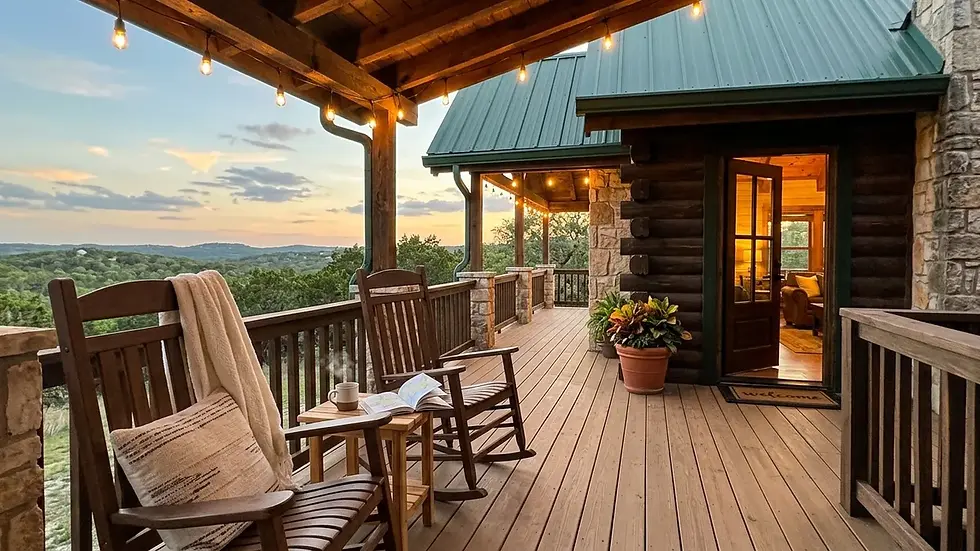
Property preparation for a vacation rental launch refers to the upgrades, furnishing decisions, safety installations, and quality standards your property must meet before it can generate strong early reviews. First impressions in the short-term rental market are expensive to recover from. A guest who checks in to find a slow Wi-Fi connection, a poorly stocked kitchen, or a mattress that belongs in a college dorm will say so in their review.
Kitchens and bathrooms are the two areas where guests hold the highest expectations for cleanliness and functionality. Prioritize these spaces first when allocating your pre-launch budget. Specifically, a fully equipped kitchen means a working coffee maker, a complete set of cookware, dishes for the maximum guest count, sharp knives, and basic pantry staples. Bathrooms need quality towels, a hair dryer, and enough toiletry backup supplies to cover the first several turnovers.
Beyond furnishings, install a smart lock system before your first guest arrives. Keypad or app-based entry eliminates lost key problems, enables remote check-in management, and allows you to change codes between bookings without a locksmith. Smart locks are standard in well-run properties and guests increasingly expect them. A noise monitor (not a recording device) also protects your property and your neighbors while staying within Airbnb's rules.
The Turnover Checklist as a Pre-Launch Asset
Build your turnover checklist before your first guest checks in, not after. This document becomes the instruction set for your cleaning team and the quality standard for every subsequent stay. A walkthroughafter every clean, checking the checklist against actual conditions, protects your reviews and reduces refund requests. Properties with documented turnover processes consistently outperform those relying on informal verbal instructions to cleaners.
For additional guidance on property preparation standards, the Porch Warranty guide on transforming your home into a vacation rental covers maintenance coverage considerations worth reviewing before your first hosting season.
How Do You Build a Listing That Actually Converts Browsers Into Bookers?
A high-converting vacation rental listing is one that communicates the property's character, amenities, and location advantages clearly enough that a guest chooses to book without needing more information. Most first-time hosts underinvest in listing creation and then wonder why views don't translate into bookings.
Photography is not optional. Guests click through only 2-3 images before deciding to move on, and some won't consider a property with fewer than 10 photos. Shoot photos in the order a guest would experience the property, from arrival at the front door through the main living spaces, kitchen, bedrooms, bathrooms, and any outdoor amenities. A hot tub, fire pit, or game room deserves its own hero shot. Natural morning light is almost always the best time to photograph interiors.
Your listing title and description need to work within each platform's algorithm. Airbnb's search algorithm weighs response rate, review score, and listing completeness alongside keyword relevance. Complete every field, including the neighborhood description, accessibility information, and house rules. Write a description that captures what is genuinely distinctive about the property, not a generic list of features every rental has.
At Stay In The Heart of Texas, listing optimization is one of the first areas we address when taking on a new property. A well-written listing for a property like the Barn Haus in Fredericksburg, which was built around a live oak tree to preserve it, earns bookings because the story is specific and the property's character is communicated clearly. Generic listing copy never captures that kind of detail.
Choosing Your Platform Mix
List on at least two platforms before your first booking. Airbnb and VRBO attract meaningfully different traveler profiles: Airbnb skews younger and more flexible; VRBO draws more family and group bookings, often with longer lead times. The Hill Country market sees strong demand on both. But managing two platforms without a channel manager creates a double-booking risk the first time a reservation comes in on both simultaneously. Set up a channel manager before you activate both listings, not after your first conflict.
What Technology Do You Need to Set Up Before Going Live?
A vacation rental technology stack refers to the set of software tools that automate and coordinate the operational tasks of hosting, including pricing, guest communication, cleaning coordination, and multi-platform calendar management. Setting up this stack before your first booking dramatically improves your early review scores and reduces the operational time cost of self-management.
First-time hosts most commonly skip the technology setup entirely and then spend the first several months manually managing tasks that should be automated. According to self-managing host communities, running a vacation rental manually requires an estimated 3-5 hours per week once the property is established. That number climbs quickly when a second platform is added, guest inquiries increase, or a pricing update is needed for an upcoming demand window.
Specifically, here are the tools to set up before going live. A dynamic pricing tool such as Beyond Pricing connects to your listing and adjusts nightly rates based on market demand, local events, and competitor pricing signals. A channel manager syncs your availability calendar across Airbnb, VRBO, and any direct booking site in real time, eliminating double-booking risk. Automated messaging through your property management software or Airbnb's native scheduled messages handles pre-arrival instructions, check-in details, and post-checkout review requests without requiring you to manually type each one.
For an investor-level due diligence approach to technology and operations setup, the Due Diligence Checklist from Anchor Down Management provides a useful framework that extends naturally into pre-launch operational planning.
Guest Screening and House Rules Setup
Set your house rules before your listing goes live, not after your first difficult guest. House rules on Airbnb and VRBO are enforceable through the platforms' resolution processes only if they are clearly documented in the listing before the guest books. Rules around noise, pets, parking, maximum occupancy, and outside visitors need to be explicit. Airbnb's instant book feature can be used alongside minimum stay requirements and guest criteria to add a layer of screening without requiring you to manually vet every inquiry. As ShelterForce reported in June 2026, the guest and tenant screening technology landscape involves significant algorithmic complexity. Clear, written house rules remain your most reliable protection regardless of which screening tools you use, as noted in their June 2026 analysis of screening oversight.

How Do You Handle Taxes and Bookkeeping Before the First Guest Arrives?
Vacation rental tax and bookkeeping setup refers to the financial infrastructure you put in place before your first booking to ensure accurate record-keeping, proper tax collection, and a clean separation between rental income and personal finances. Most first-time hosts treat this step as something to figure out at tax time. That's the wrong approach, and it costs more to fix retroactively than to set up correctly from day one.
Open a dedicated bank account for the rental property before your first booking. All income flows in; all property expenses flow out. This single practice makes bookkeeping, expense tracking, and tax filing significantly cleaner. Accounting software such as QuickBooks or Wave allows you to categorize expenses in real time rather than reconstructing months of transactions every April.
The 14-day personal use rule is critical if you plan to use the property yourself. Under IRS rules, if you use the property for personal purposes for more than 14 days in a tax year, or more than 10% of the days it was rented at a fair market rate (whichever is greater), certain deductions are limited. Understand this rule before you set your personal use schedule for 2026 and beyond. Track every expense from your first pre-launch supply run, because mortgage interest, cleaning costs, maintenance, supplies, insurance, and platform fees are all potentially deductible.
What Does a Complete Pre-Listing Checklist Look Like by Category?
A structured pre-listing checklist organizes every launch requirement into actionable categories so first-time hosts can verify completion across legal, financial, physical, marketing, technology, and operations before accepting their first booking. The table below provides the framework used by experienced property operators and management teams.
Category | Checklist Item | Common Miss |
Legal | Local STR permit or business license obtained | Assuming no permit is required without verifying |
Legal | Hotel occupancy tax registration complete (city and state) | Relying on Airbnb to handle all HOT collection |
Legal | Zoning classification confirmed for STR use | Not checking HOA or deed restrictions |
Legal | LLC formation (or documented decision not to use one) | Skipping until after a liability event |
Insurance | STR-specific insurance policy active with written confirmation | Assuming standard homeowners policy covers guests |
Insurance | Policy covers liability, theft, water damage, and lost income | Relying on platform protection programs as primary coverage |
Financial | Dedicated bank account opened for rental income and expenses | Mixing rental income with personal accounts |
Financial | Accounting software or spreadsheet system in place | Waiting until tax time to organize expenses |
Financial | Realistic revenue projection with conservative occupancy assumption | Projecting peak-season occupancy year-round |
Property | Kitchen fully equipped for maximum guest count | Under-stocking cookware and kitchen essentials |
Property | Smart lock installed and tested | Relying on physical keys for first-guest check-in |
Property | Noise monitor installed (non-recording) | No neighbor protection or party deterrent in place |
Property | Turnover checklist created and tested with cleaning team | Verbal instructions only, no written standard |
Marketing | Professional photography complete (10+ photos minimum) | iPhone photos or fewer than 10 images |
Marketing | Listing live on Airbnb and VRBO with all fields complete | Listing on one platform only |
Marketing | House rules written and published in the listing | Adding rules reactively after a guest problem |
Technology | Channel manager set up and syncing all platforms | Manually blocking calendars across platforms |
Technology | Dynamic pricing tool connected and configured | Setting a flat rate with no seasonal variation |
Technology | Automated guest messaging sequences set up | Manually typing every pre-arrival message |
Tax | HOT registration numbers obtained and documented | No registration before first booking |
Tax | 14-day personal use rule understood and documented | Personal use not tracked, deductions at risk |
What Is the 80/20 Rule for Airbnb Hosts Just Starting Out?
The 80/20 rule for Airbnb hosting refers to the principle that roughly 80% of your booking revenue comes from getting 20% of your operational decisions right: specifically, photography, pricing strategy, and guest communication response time. Everything else matters, but these three levers have a disproportionate impact on both your search ranking within Airbnb's algorithm and your early review score.
Photography drives click-through from search results. Pricing drives conversion once a guest clicks. Response time affects where your listing ranks in Airbnb's search results, since the platform's algorithm directly weights host response rate and speed. A 10-minute daily window to answer guest inquiries is one of the most impactful habits a new host can build. According to data cited by Coconut Coast Realtors, fast replies directly impact booking conversion rates, and slow response times suppress search ranking even for well-priced, well-photographed properties.
Apply the 80/20 lens to your pre-launch budget and time as well. If you have a limited setup budget, professional photography and a dynamic pricing tool will return more than new decorative items or premium amenity upgrades in your first six months.
Frequently Asked Questions
Do I need a permit to list my cabin on Airbnb in Fredericksburg or New Braunfels, Texas?
Yes. Both Fredericksburg and New Braunfels require short-term rental operators to obtain local permits or registrations before accepting bookings. New Braunfels requires a Hotel Occupancy Tax registration through the city's Finance Department. Fredericksburg has its own STR permit process. Requirements change, so verify current rules directly with each city's relevant department and with the Texas Comptroller of Public Accounts for state-level hotel occupancy tax obligations before your listing goes live.
What insurance does a vacation rental host in Texas need before the first guest?
You need a short-term rental specific or landlord insurance policy that covers liability, theft by guests, water damage, and loss of rental income following a covered event. Standard homeowners insurance policies often explicitly void coverage once you accept paying guests. Airbnb's AirCover for Hosts provides some supplemental protection but is not a replacement for a dedicated policy. Confirm your coverage in writing before accepting your first booking.
How do I collect and remit hotel occupancy tax for a Texas short-term rental?
Texas requires STR operators to collect and remit state hotel occupancy tax through the Texas Comptroller of Public Accounts at comptroller.texas.gov. Many Texas cities also require a local HOT registration and separate remittance. Airbnb collects and remits some taxes on your behalf in certain Texas jurisdictions, but not all, and local HOT obligations may still fall to the host. Register with both the state and your municipality before your first booking and keep documentation of your registration numbers.
What is the 2% rule for rentals, and does it apply to vacation rentals?
The 2% rule is a real estate investment heuristic suggesting that a rental property's monthly income should equal at least 2% of its purchase price to be considered a strong investment. For example, a $300,000 property would need to generate $6,000 per month. In practice, this threshold is difficult to hit in most established vacation rental markets, including the Texas Hill Country, where property prices have risen significantly. The rule is more useful as a quick-filter tool for initial market screening than as a precise profitability standard for vacation rentals, where seasonality and operating costs require a more detailed financial model.
Should I form an LLC before listing my first vacation rental?
Forming an LLC before your first booking is generally advisable because it separates your personal assets from any liability generated by the property. A guest injury, a damage claim exceeding your insurance limits, or a neighbor dispute can reach your personal finances if the property is held in your name. The cost of formation is low relative to the protection it provides. Consult with a local attorney or accountant before making the decision, as the right structure depends on your specific financial situation and the state in which the property is located.
How many photos does a vacation rental listing need to be competitive?
Most experienced hosts and platform guidance suggest a minimum of 20-30 high-quality photos for a competitive listing, though 10 photos is often cited as the minimum threshold below which some guests won't consider a property. Shoot photos as if the guest is walking through the property from arrival to departure: exterior, entryway, living spaces, kitchen, each bedroom, bathrooms, and all outdoor amenities. The hot tub, fire pit, and game room each deserve their own dedicated shots. Natural morning light consistently produces the best interior results.
What is the 75/55 rule for Airbnb pricing?
The 75/55 rule is an informal pricing guideline used by some Airbnb hosts suggesting that a property's nightly rate should be at least 75% of a comparable hotel rate in the area, and that cleaning fees should not exceed 55% of the nightly rate to avoid deterring potential guests. Neither figure is an official Airbnb standard, but both reflect real booking behavior patterns. High cleaning fees relative to the nightly rate are a well-documented cause of cart abandonment, particularly for short one or two-night stays. If your cleaning cost is genuinely high, adjusting your minimum stay length is often a more effective solution than capping the cleaning fee below your actual cost.
What Should You Prioritize in the Final Week Before Your Listing Goes Live?
Launching your first vacation rental successfully comes down to completing the non-negotiable items in this checklist before you activate your listing, not after your first guest has already arrived. The legal and insurance steps cannot be deferred. The technology stack should be in place, not configured in parallel with live bookings. And your photography and listing copy should be completed before, not simultaneously with, your go-live date.
The first 90 days of any new listing are critical. Airbnb and VRBO both give new listings a temporary visibility boost in search results. Hosts who launch with a complete, well-photographed, correctly priced listing capture that window and build early review momentum. Hosts who launch unprepared often squander it and spend months rebuilding their ranking.
If you're preparing to list a property in the Texas Hill Country, and you want to get this right from the first booking, the team at Stay In The Heart of Texas has worked through this exact setup process across a portfolio of Fredericksburg and New Braunfels properties. The patterns that lead to strong early performance are consistent. Getting the checklist right is the starting point.
For first-time hosts who want additional guided support, Airbnb's Ambassador Program offers free one-on-one coaching with experienced hosts, which can be a useful supplement to working through your own pre-launch process.

If you're getting ready to list your Hill Country property for the first time, the setup decisions you make now will affect every booking you receive for the next several years. Stay In The Heart of Texas helps new hosts in Fredericksburg, New Braunfels, and across the Hill Country get every piece of the launch right, from legal registration and listing optimization to technology setup and guest communication systems. Connect with our team at stayintx.com to learn what a professionally managed launch looks like for your specific property.


Comments