
San Antonio STR Permit: The Complete 2026 Owner Guide

A San Antonio STR permit is a city-issued license required for anyone renting out a residential unit for stays under 30 consecutive days within San Antonio city limits. The city offers two permit types, Type 1 for owner- or operator-occupied units at $300 and Type 2 for non-occupied units at $450, each valid for three years through the Development Services Department.
At Stay In The Heart of Texas, we manage vacation rental properties across the Texas Hill Country and Central Texas corridor, including San Antonio, and permit questions come up in nearly every conversation with new owners. Getting the permit type wrong, or missing a density cap on a Type 2 unit, is one of the more common and avoidable mistakes we see property owners make in 2026.
Two permit types exist: Type 1 (owner- or operator-occupied, $300, no density limit) and Type 2 (non-occupied, $450, capped at 12.5% of block-face units).
Permits last three years and must be renewed through the city's BuildSA portal before expiration.
San Antonio's STR market supports 9,670 to 9,737 active listings as of May-June 2026, according to AirDNA, with average annual revenue near $20,200 per listing.
Every STR unit needs its own permit; permits are non-transferable between units, and the permit number must appear on every listing advertisement.
Hotel Occupancy Tax registration is separate from the STR permit and must be filed with both the city and the Texas Comptroller.
STRs are banned outright in C-3 General Commercial and all industrial zoning districts.
If you're considering listing a property in San Antonio in 2026, or you already operate one and are unsure whether your paperwork is current, this guide walks through every layer of the permit process: which type applies to your situation, what it costs, how the application works inside BuildSA, and where owners most often get tripped up on zoning density or Board of Adjustment exceptions. San Antonio's short-term rental ordinance has been in place since November 2018, but enforcement and density rules have tightened since, so what worked for a neighbor's rental five years ago may not apply to your address today.
This is not a legal document, and specific fees or ordinance language can change. Always confirm current requirements directly with the City of San Antonio's Development Services Department before applying. What follows reflects the ordinance and application requirements as published, plus practical guidance from managing rental properties in the region.
Does San Antonio Allow Short-Term Rentals?
Yes, San Antonio allows short-term rentals, but only with a valid STR permit and only in permitted zoning districts. The city's Short-Term Rental Ordinance, passed on November 1, 2018, defines an STR as any rental of a residential unit for fewer than 30 consecutive days, and it applies specifically to properties within San Antonio city limits.
Specifically, the ordinance prohibits STRs in C-3 General Commercial districts and in all industrial zones, including L, I-1, I-2, MI-1, and MI-2. If your property sits within one of these districts, no permit application will get approved regardless of how you structure the unit. Additionally, the ordinance distinguishes between two operating models: owner- or operator-occupied units (Type 1) and non-occupied investment units (Type 2), each with different density rules.
Properties located outside San Antonio's city limits, even in unincorporated Bexar County, are not subject to this STR permit requirement. Those owners still need a Hotel Occupancy Tax account with the Texas Comptroller, but they skip the DSD permit process entirely. As of 2026, this distinction matters more than ever given how much investor interest has shifted toward properties just outside city boundaries specifically to avoid the density caps described below.

What Types of STR Permits Does San Antonio Require?
San Antonio requires either a Type 1 or Type 2 STR permit, and the correct choice depends entirely on whether the owner or a designated operator lives on-site. Type 1 permits cover owner- or operator-occupied units and carry no neighborhood density restriction, while Type 2 permits cover non-occupied investment rentals and are capped at 12.5% of units on a given block face.
This distinction is the single most consequential decision in the entire application, and it's where we see the most confusion from out-of-state cabin owners who assume any residential rental qualifies the same way. A Type 1 permit signals to the city that someone with a real stake in the property's day-to-day condition is nearby, which is why it isn't subject to the same neighborhood saturation limits.
Type 1 vs. Type 2: The Comparison
Feature | Type 1 Permit | Type 2 Permit |
Occupancy requirement | Owner or operator lives on-site | No occupancy requirement |
Fee (3-year validity) | $300 | $450 |
Density limit | None, allowed by right | Capped at 12.5% of block-face units |
Multi-family building cap | N/A | 12.5% of total units, rounded down |
Exceeding the cap | Not applicable | Requires Board of Adjustment special exception within 45 days, or the application is denied |
Best fit for | Second home owners renting occasionally, house-hackers | Dedicated investment properties, full-time vacation rentals |
For most real estate investors building a portfolio in San Antonio, Type 2 is the applicable category, and that means checking the block-face density cap before you even submit paperwork. If you're the second or third investor on a block trying to secure a Type 2 permit, you may be forced into a Board of Adjustment appeal, which we cover in detail further down.
What Is the STR Tax in San Antonio?
San Antonio short-term rental operators must collect and remit a Hotel Occupancy Tax, currently set at 17% of the rental amount, which combines the city's local HOT rate with applicable State of Texas hotel tax. This tax registration is entirely separate from the STR permit itself and must be filed independently.
Specifically, operators register for a Hotel Occupancy Tax account through two channels: the city's tax office for the local portion, and the Texas Comptroller Hotel Occupancy Tax registration page for the state portion. Missing either registration is a common compliance gap we see among first-time hosts who assume the STR permit alone covers tax obligations. As a result, many owners end up owing back taxes plus penalties once the city cross-references permit holders against HOT filings.
For properties located outside San Antonio's city limits, the STR permit requirement disappears, but the Hotel Occupancy Tax account with the Texas Comptroller still applies. This is worth double-checking with your property's exact address, since city boundaries in the San Antonio metro don't always align with mailing addresses or even ZIP codes.
Given how frequently HOT rates and reporting rules can change, we always tell clients to confirm current percentages directly with the Texas Comptroller and the city tax office rather than relying on last year's figures. Rates and thresholds are the kind of detail that shifts with little public notice.
Do You Need a STR License in Texas?
Texas does not require a statewide STR license, but individual cities, including San Antonio, New Braunfels, and San Marcos, each maintain their own permit or registration ordinances. There is no single Texas short-term rental license that covers every jurisdiction, which means the requirements change as soon as you cross a city line.
In San Antonio, that local requirement is the STR permit discussed throughout this guide. In New Braunfels and San Marcos, where Stay In The Heart of Texas also manages properties, the permitting structure, fee schedule, and density rules differ from San Antonio's ordinance, even though the underlying concept, a permit tied to a specific address and unit, remains similar across all three cities.
This patchwork approach is exactly why owners with properties spread across the Hill Country and Central Texas corridor tell us they lose track of renewal dates and fee differences between cities. If you own one rental in San Antonio and another in New Braunfels, treat them as two entirely separate compliance calendars rather than assuming one renewal cycle covers both. This is also where an STR consulting relationship pays for itself: knowing the specific ordinance language for each city, rather than assuming statewide uniformity, prevents a lot of avoidable citations.
How Do You Apply for a San Antonio STR Permit?
Applying for a San Antonio STR permit involves submitting the STR application through the city's BuildSA online portal or in person at the Development and Business Services Department, paying the applicable Type 1 or Type 2 fee, and providing proof that the unit meets safety and parking requirements. Paper applications carry an additional $10 processing fee that online submissions avoid.
Step-by-Step Application Process
Confirm your zoning district. Verify your property isn't in a C-3 General Commercial or industrial zone before starting the application.
Determine your permit type. Decide whether you or a designated operator will occupy the unit (Type 1) or whether it's a standalone investment property (Type 2).
Check block-face density for Type 2. If applying for Type 2, confirm your block hasn't already reached the 12.5% cap on STR units.
Gather required documentation. This typically includes proof of ownership, a floor plan showing the kitchen, bathroom, and sleeping area that legally define an STR unit, and confirmation of at least one off-street parking space per unit.
Submit via BuildSA or in person. Online applications through the BuildSA portal skip the $10 paper processing fee. In-person submissions go to the DSD office at 1901 South Alamo Street, San Antonio, TX 78204, open 7:45 am to 4:30 pm Monday through Friday.
Pay the permit fee. $300 for Type 1, $450 for Type 2, both covering a three-year term.
Register for Hotel Occupancy Tax. File separately with the city and the Texas Comptroller.
Post your permit number. Include it on every listing across Airbnb, VRBO, and any other advertising platform before accepting bookings.
One detail that trips up first-time applicants: the STR unit definition itself. The city defines a qualifying unit as one that contains a kitchen, bathroom, and sleeping area, per the STR application PDF. A bedroom rented without kitchen access, for instance, doesn't meet this definition and may not qualify for a standard STR permit the same way.

What Are the Zoning and Density Rules Competitors Rarely Explain?
San Antonio's zoning density rules for Type 2 STR permits cap non-occupied rentals at 12.5% of units on a given block face, and this single number determines whether your application gets approved automatically or requires a Board of Adjustment hearing. Most guides mention the 12.5% figure without explaining what happens once a block is full, which is where owners actually get stuck.
Specifically, in multi-family buildings, the same 12.5% cap applies to the total unit count, rounded down to determine the maximum number of Type 2 permits allowed. A 20-unit building, for example, would round down to two Type 2 permits maximum. This rounding-down rule, tucked into the Unified Development Code amendment effective January 1, 2023, is exactly the kind of detail that separates a smooth application from a rejected one.
What Happens If Your Block Exceeds the Density Cap?
If your block-face or building has already reached its Type 2 density limit, you can request a special exception from the Board of Adjustment. The Board has 45 days to rule on the exception request; if it doesn't act within that window, the application is automatically denied.
A successful special exception application typically includes documentation showing how the additional unit won't meaningfully increase neighborhood impact, parking strain, or noise complaints beyond what existing STRs on the block already generate. Owners who prepare a clear parking plan, showing the required off-street space is genuinely available and not shared with a tenant's own vehicle, tend to have a smoother hearing. We've also seen applications strengthen their case by including a proposed occupancy cap and noting any smart lock or check-in system that limits unregistered guests, since neighbor complaints about STRs are almost always about noise or overcrowding, not the rental concept itself.
If you're weighing whether a specific San Antonio block is worth pursuing for a Type 2 unit, checking density saturation before you close on the property saves significant time. This is a step we walk owners through as part of STR consulting and advisory work, since a rejected Board of Adjustment case can delay a launch by months.
How Much Is a Fence Permit in San Antonio?
A fence permit in San Antonio is a separate municipal permit from the STR permit and is typically required when installing or replacing a fence above a certain height, most commonly six feet, on residential property. Fence permit fees and requirements are handled through the same Development Services Department that processes STR applications, but they follow an entirely different fee schedule and review process.
For STR owners specifically, a fence often becomes relevant when adding privacy for a hot tub, pool, or backyard amenity aimed at improving the guest experience. If your renovation plans include a new fence alongside your STR launch, budget time for both permit processes running in parallel, since they're reviewed by different divisions within DSD. Because exact fence permit costs can change and vary by project scope, confirm current fees directly with the Development Services Department rather than relying on a flat estimate.
What Does the STR Permit Process Look Like in Practice?
The practical experience of applying for a San Antonio STR permit in 2026 involves more waiting and documentation-gathering than most first-time hosts expect, particularly around proving parking compliance and unit occupancy classification. The paperwork itself is straightforward; the delays usually come from missing documentation on the first submission.
From what we see managing rental properties across Fredericksburg, New Braunfels, and San Antonio, the most common first-submission rejection reason is an incomplete parking plan. The city requires a minimum of one off-street parking space per STR unit, and applicants sometimes assume street parking or a shared driveway satisfies this. It doesn't. Confirm your dedicated space before submitting, not after a rejection notice arrives.
Renewal is the second place owners lose track of compliance. Permits run for three years, and BuildSA sends a renewal notice by email before expiration, according to the Short Term Rental Association of San Antonio. But email notifications land in spam folders, addresses change, and out-of-state owners managing a property remotely are the group most likely to miss this window entirely. Set your own calendar reminder six months before your permit's three-year mark rather than relying solely on the automated notice.
Enforcement has also become more visible since the ordinance's original 2018 passage. The city can inspect properties, issue citations, and suspend or revoke permits for safety, nuisance, or permit violations. Guests searching a listing and finding no visible permit number is one of the easiest enforcement triggers, since it's checkable without a site visit.

Self-Managing Compliance vs. Hiring Local Support
Self-managing STR permit compliance in San Antonio is fully possible for a single, straightforward Type 1 property, but it becomes considerably more time-consuming once you own multiple units, manage from out of state, or need to navigate a Board of Adjustment density dispute. The tradeoff isn't about capability, it's about time and risk tolerance.
San Antonio's STR market remains strong enough to justify the compliance effort. As of May 2026, AirDNA reports the market carries a Market Score of 91 out of 100, average daily rates around $175, and RevPAR near $90, with annual revenue increasing 11.0% year-over-year even as active listings declined roughly 10%, a signal that demand is consolidating around fewer, better-run properties. That consolidation trend matters: cities appear to be favoring properties with clean compliance records as enforcement tightens, which raises the cost of ignoring permit renewal dates or density rules.
For owners managing a single, nearby property, handling the BuildSA application and HOT registration directly is reasonable. For out-of-state cabin owners or investors building a multi-property portfolio across San Antonio, New Braunfels, and Fredericksburg, tracking three separate renewal calendars and three separate zoning ordinances is where things fall through the cracks. This is exactly the kind of compliance coordination Stay In The Heart of Texas handles as part of STR consulting and advisory services, alongside full-service property management for owners who'd rather not track permit expiration dates themselves.
Common STR Permit Mistakes to Avoid in San Antonio
The most frequent San Antonio STR permit mistakes involve applying for the wrong permit type, missing the block-face density cap for Type 2 units, and failing to renew before the three-year expiration. Each of these mistakes is preventable with a short checklist review before submission.
Applying for Type 1 when you don't actually occupy the unit. Misclassifying occupancy status can trigger a permit revocation if the city verifies occupancy during an inspection.
Skipping the density check before closing on an investment property. Buying a property assuming a Type 2 permit is guaranteed, without checking the block-face saturation first, risks a Board of Adjustment delay.
Treating the STR permit and HOT registration as the same thing. They are filed separately, with the city and with the Texas Comptroller, and both are required.
Not posting the permit number on every listing platform. This is one of the simplest enforcement checkpoints, and missing it invites an easy citation.
Assuming one parking space arrangement covers multiple units on the same lot. The city requires one dedicated off-street space per unit, not per lot.
Letting the three-year renewal lapse. Relying solely on the automated BuildSA email notice, rather than an independent calendar reminder, is the most common cause of accidental non-renewal among out-of-state owners.
If you're weighing whether San Antonio's overall STR market still makes sense for a new investment given these compliance layers, it's worth comparing the effort against nearby markets like Canyon Lake or Fredericksburg, where the ordinance structure and permitting process differ. Some investors in our portfolio split attention between San Antonio's stronger revenue numbers and Fredericksburg's simpler regulatory environment, and the right answer depends on how hands-on you want to be with paperwork versus revenue potential.
San Antonio STR Market Snapshot for 2026
San Antonio's short-term rental market in 2026 shows a smaller but more productive inventory, with active listings settling between roughly 9,670 and 9,737 depending on the reporting month, according to AirDNA's June 2026 data. Average annual revenue per listing sits near $20,200, with a 56% average occupancy rate and a $175 average daily rate.
Metric | 2026 Figure | Source |
Active STR listings | 9,670-9,737 | AirDNA, June 2026 |
Average annual revenue per listing | $20,200 | AirDNA, June 2026 |
Average occupancy rate | 56% | AirDNA, June 2026 |
Average daily rate | $175 | AirDNA, June 2026 |
RevPAR | $90 | AirDNA, June 2026 |
Market Score | 91/100 | AirDNA, June 2026 |
Year-over-year revenue growth | 11.0% | AirDNA, May 2025-May 2026 |
Notably, occupancy climbs well above the annual average during peak season. July has historically been the strongest month for San Antonio STRs, with occupancy pushing toward 60% and higher average daily rates than the annual figure. That seasonal swing matters for pricing strategy: a static year-round rate leaves money on the table during peak summer months and overprices slow winter weeks.
The listing decline paired with revenue growth suggests the city's enforcement of permit compliance is thinning out unregistered or poorly managed properties, while well-run, permitted rentals are capturing a growing share of guest demand. For owners deciding whether to expand into San Antonio in 2026, this points toward prioritizing compliance and guest experience over simply adding inventory.
Frequently Asked Questions
How much does a San Antonio STR permit cost?
A San Antonio STR permit costs $300 for a Type 1 (owner- or operator-occupied) permit or $450 for a Type 2 (non-occupied) permit, both valid for three years. Paper applications submitted by mail or in person carry an additional $10 processing fee that online BuildSA submissions avoid.
How long does a San Antonio STR permit last?
A San Antonio STR permit is valid for three years from the date of issuance. BuildSA sends a renewal notice by email before expiration, but owners, especially those managing remotely, should set an independent reminder rather than relying solely on that automated notice.
Can I have more than one STR unit under a single permit?
No. Each individual STR unit requires its own separate permit, and permits cannot be transferred between units. If you own multiple rental units, even on the same property, you'll need to apply for and pay for a permit for each one.
What's the difference between Type 1 and Type 2 STR permits in San Antonio?
Type 1 permits apply to owner- or operator-occupied units, cost $300, and have no neighborhood density limit. Type 2 permits apply to non-occupied investment properties, cost $450, and are capped at 12.5% of units on a given block face or within a multi-family building.
Do I need a permit if my property is outside San Antonio city limits?
No STR permit is required if your property sits outside San Antonio's official city limits, even within Bexar County. You'll still need to register for a Hotel Occupancy Tax account with the Texas Comptroller, but the city's STR ordinance and permit process only apply within city boundaries.
What happens if I operate an STR in San Antonio without a permit?
Operating without a valid permit exposes you to city inspection, citations, and potential legal action, since the STR ordinance grants Development Services Department the authority to enforce permit, safety, and nuisance provisions. Unregistered listings are also relatively easy for the city to flag since permit numbers are required on every advertising platform.
Can I appeal if my block has reached the Type 2 density limit?
Yes. You can request a special exception from the Board of Adjustment, which has 45 days to rule on the request. If the Board doesn't act within that window, the application is automatically denied, so timing and documentation quality matter for a successful appeal.
Do I still need to pay Hotel Occupancy Tax if I have an STR permit?
Yes, the STR permit and Hotel Occupancy Tax registration are entirely separate requirements. You need both: the permit from the city's Development Services Department and a HOT account registered with the city and the Texas Comptroller, with monthly filings based on rental income.
Conclusion: Getting Your San Antonio STR Permit Right in 2026
A San Antonio STR permit comes down to three decisions: choosing between Type 1 and Type 2 based on occupancy status, confirming your block-face density before committing to an investment property, and keeping your three-year renewal calendar separate from your Hotel Occupancy Tax obligations. With the city's market posting an 11.0% year-over-year revenue increase alongside a declining but more productive listing count, compliance is becoming the differentiator between rentals that thrive and ones that quietly lose ground to enforcement.
Whether you're a first-time host weighing San Antonio against Fredericksburg or New Braunfels, or an investor managing several permits across the Hill Country, the paperwork itself is manageable. The parts that trip owners up, density caps, Board of Adjustment timelines, and renewal tracking across multiple cities, are where local experience actually pays off.
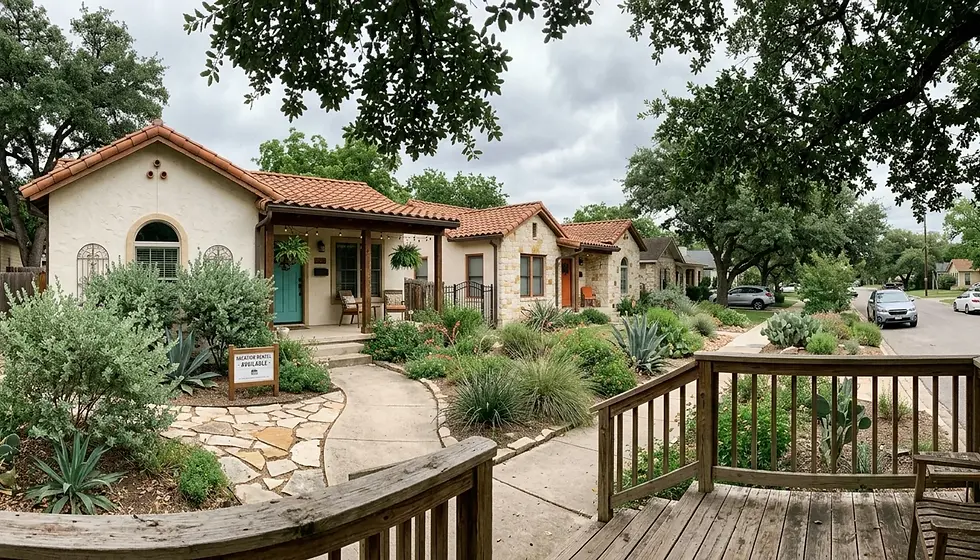
If tracking permit renewals, density caps, and Hotel Occupancy Tax filings across San Antonio, New Braunfels, or Fredericksburg is more than you want to manage alone, Get started with Stay In The Heart of Texas for STR consulting and full-service property management built around Hill Country and Central Texas regulations. Reach out anytime to talk through what compliant, hands-off management could look like for your property.
Written by Rashmi Bhat, Owner & Operator at Stay In The Heart of Texas


Comments