
Best Cohost San Marcos: How to Hire One Who Delivers

The best cohost in San Marcos is the one who puts scope and exit terms in writing and prices your calendar around Texas State and river season instead of a flat nightly rate. At Stay In The Heart of Texas, we co-host Hill Country rentals for owners who keep their Airbnb listing and hand off guest messaging, turnovers, and pricing. Fees rise with scope, so compare quotes on what each one covers, not the headline percentage.
Key Takeaways
Co-hosting typically costs 10-18% of gross booking revenue, while full-service management typically runs 15-30%, so the fee tracks how much work you hand off.
In 2026 San Marcos market data, about 38.7% of listings are cohosted and 16.4% are run by professional management companies, so you have local options in both categories.
San Marcos demand peaks from May through August; AirROI estimates listings earn about 73% more per month in June to August than in December to February.
San Marcos regulates short-term rentals under City Code Chapter 34, Article 7, and a suspended permit bars the operator from taking new reservations.
Before signing, get scope, fee base, repair approval limits, and termination terms in writing, and ask for proof of response times and review trends.
Picture a Friday in late August. Move-in traffic is stacking up on I-35, your cleaner just texted that she cannot make the 11 a.m. turnover, and you are three hours away in a meeting. That scene is why owners search for a cohost, and why the wrong one costs more than the fee.
San Marcos rewards owners who get this right. The City of San Marcos puts its January 1, 2026 population estimate at 91,082, and its annual financial report says the city sees more than 14 million visitors annually. But supply has grown fast: CoStar, citing AirDNA data, reports short-term rental supply in the area rose 71% from June 2021 to June 2025 while demand rose 24%. A listing that is merely adequate gets buried.
Below you will find fees with a net income table and a vetting checklist. Contract terms and the San Marcos permit basics follow, written for owners in town and along the wider Central Texas corridor.
What Does an Airbnb Cohost Do for San Marcos Property Owners?
An Airbnb cohost is an operating partner who handles the daily work of a short-term rental. You keep the listing and the platform account, and you have the final say on big decisions. Airbnb's Co-Host Network lists service categories such as listing setup, pricing and availability, reservations, guest messaging, onsite support, cleaning, photography, interior design, and licensing and registration. A cohost may cover one of those or most of them.
In San Marcos the scope matters more than the label. A Texas State football Saturday and a July tubing weekend on the spring-fed San Marcos River strain a turnover schedule in very different ways. A cohost who only answers messages leaves you holding the 2 a.m. call about a clogged drain.
How Is a Cohost Different From a Property Manager?
A cohost works inside your Airbnb account and leaves the listing under your control, which is why the fee sits lower. A full-service property manager typically takes over the listing and the vendor contracts. Owner statements come with the job too. If you want to keep the decisions and cut the workload, read how co-hosting works in San Marcos before you compare it with full management.
How Much Should You Pay Someone to Host Your Airbnb in San Marcos?
Cohost pay is a percentage of gross booking revenue, and the percentage climbs with how much of the operation you hand over. Industry benchmarks put co-hosting at roughly 10-18% of gross revenue, with full-service management typically running 15-30%. Cohosts who only message guests and manage the calendar sit near the bottom. Cohosts who dispatch cleaners and handle in-stay problems sit near the top.
That answers how much cohosts get paid in practice. On a month with $4,000 in bookings, a 15% fee pays the cohost $600. Ask whether the percentage applies to the total guest payment or only the nightly rate, because that single clause shifts what you owe every month.
Which Costs Sit Outside the Percentage?
Budget separately for cleaning and supplies. Repairs and photography need their own lines too. Some managers pass contractor invoices through at cost; others add an administrative markup, which industry benchmarks put at 10-20%. We see owners fixate on the headline percentage and skip the markup question, even though it can erase the gap between two quotes.
Is Co-Hosting on Airbnb Worth It? A Net Income Breakdown
Co-hosting is worth it when the fee costs less than the extra revenue the cohost produces plus the value of the hours you stop spending on your own listing. According to AirDNA's San Marcos market data, San Marcos has 511 active short-term rental listings that earn an average of $29.8K per year, with 59% average occupancy and a $158 average daily rate in 2026. The table runs that average through three illustrative fee levels. They come from the industry range above, not from a survey of San Marcos cohost fees, so replace them with the percentages in your own quotes.
Illustrative fee | Annual fee on $29,800 | Left after fee | Revenue lift needed to break even |
10% (low end of co-hosting) | $2,980 | $26,820 | About 11% |
15% (mid-range, with on-the-ground coverage) | $4,470 | $25,330 | About 18% |
18% (top of the co-hosting range) | $5,364 | $24,436 | About 22% |
These numbers sit before cleaning, supplies, platform fees, taxes, and your mortgage, so use them as a screening tool rather than a forecast. Industry benchmarks suggest professional management typically delivers 20-40% higher annual revenue than self-management, mainly through dynamic pricing and occupancy gains. That is a typical range and not a promise, so no cohost should guarantee it.
Self-managing wins when you live in town, run one simple unit, and have a flexible schedule. Everyone else is paying for coverage, and the break-even column tells you how much lift to demand in return.

What Makes the Best Cohost in San Marcos Stand Out?
A standout San Marcos cohost is a local operator who staffs and prices around the town's real demand drivers. Those drivers include Texas State University, the San Marcos River, Aquarena Springs, Wonder World, and the outlet shopping along I-35. The San Marcos Convention & Visitors Bureau reports travelers spent $208.7 million directly in San Marcos in 2025, so the visitor base is deep enough to reward sharp pricing.
Seasonality is steep. AirROI identifies May through August as high season, with occupancy reaching 46.3% in June 2026 against 29.7% in January 2026. At the Texas-area homes we manage, demand also peaks in June. AirROI also shows average stays running from 2.5 nights in September to 4.7 nights in January, which means more turnovers in the shoulder months than most owners expect.
A cohost who sets one nightly rate and disappears misses all of this. Ask how they handle gap nights and event weekends, then compare the answer with our thinking on nightly rate strategy for San Marcos rentals.
How Do You Find and Vet a Cohost Near San Marcos?
Vetting a cohost means confirming, before you sign, who answers the phone after midnight and who dispatches and pays local vendors. Ask what evidence backs their performance claims. Start with the Airbnb Co-Host Network, where availability depends on your address, so check inside your Airbnb account. Referrals from other San Marcos hosts and regional management firms are the other main routes. About 38.7% of San Marcos listings are cohosted and 16.4% run through professional management companies, so candidates are not scarce.
Run every candidate through the same checklist:
Request the scope in writing, including after-hours coverage, cleaning inspection, and maintenance dispatch.
Ask for references from owners in San Marcos or Central Texas, and call them.
Request evidence: response-time records, review score trends, and a sample owner statement.
Confirm who pays local vendors and what repair amount needs your approval.
Ask what happens when the lead cleaner cancels on a peak weekend.
Start with a short initial term so you can measure results before committing further.
Red flags are easy to spot. Anyone who guarantees revenue or occupancy is guessing, and a remote-only cohost who cannot name a local plumber is not covering your property. Local Facebook groups can surface freelancers; verify identity, insurance, and references before anyone gets a smart lock code. For a wider view of Texas options, see our statewide guide on what Texas owners need from a cohost.
What Should a Cohost Agreement Include?
A cohost agreement is a written contract that fixes duties and fee basis before the first guest arrives. It should also settle spending authority and termination rights. Verbal promises carry no weight when a review drops or a cleaner no-shows, so ask for these points in writing:
The fee base: gross guest payment, nightly rate only, or net of cleaning and taxes.
Extra charges: markup on repairs, supply restocking, and photography.
Spending authority: the repair amount the cohost can approve alone, plus any owner reserve, which industry benchmarks put at $200-$500.
Service standards: guest response times and review score targets rather than revenue guarantees.
Termination: notice period, treatment of bookings already on the calendar, and who keeps the listing, reviews, and guest data.
Access: your own login to the calendar, payouts, and reports.
We lean toward shorter terms with a clean exit for missed response times. A contract that locks you in for a year with no performance trigger protects the cohost more than you. Ask for a sample owner statement too: a good one shows revenue, fees, and expenses by month, plus how the listing performed against comparable San Marcos homes.
What Do San Marcos Short-Term Rental Rules Mean for Your Cohost Search?
San Marcos short-term rental regulation is the set of city rules that decide whether you may host guests at your address. The city handles it through City Code Chapter 34, Article 7, updated under Ordinance 2024-14(c). Occupancy limits follow the city-adopted International Fire Code requirements for sleeping and gathering, and you must give that limit to renters. A suspended permit bars you from taking new reservations, although existing ones may be honored.
The city also provides a public list of registered short-term rentals, which makes an unregistered listing easier to spot. Ask any cohost to show where your specific address stands before they publish anything. A manager's general assurance that the city allows rentals does not replace checking zoning and HOA covenants. Permit status for your property needs a check as well.
Texas also applies hotel occupancy tax to short-term stays through state and local requirements. Confirm current obligations with the City of San Marcos and the Texas Comptroller of Public Accounts, and put in the agreement who files and remits. Our overview of San Marcos short-term rental regulations is a starting point. Rules change, so verify current requirements with the city before you list. This is not legal advice.

How Does Co-Hosting Work at Stay In The Heart of Texas?
Co-hosting at Stay In The Heart of Texas is a flexible split: you keep ownership of the listing and the big decisions, and our owner-operated team takes the operational load. We manage 10 short-term rentals, from Fredericksburg cabins to New Braunfels homes such as Water Spray Lane and Texas Haus on the I-35 corridor, so the same systems run across every property.
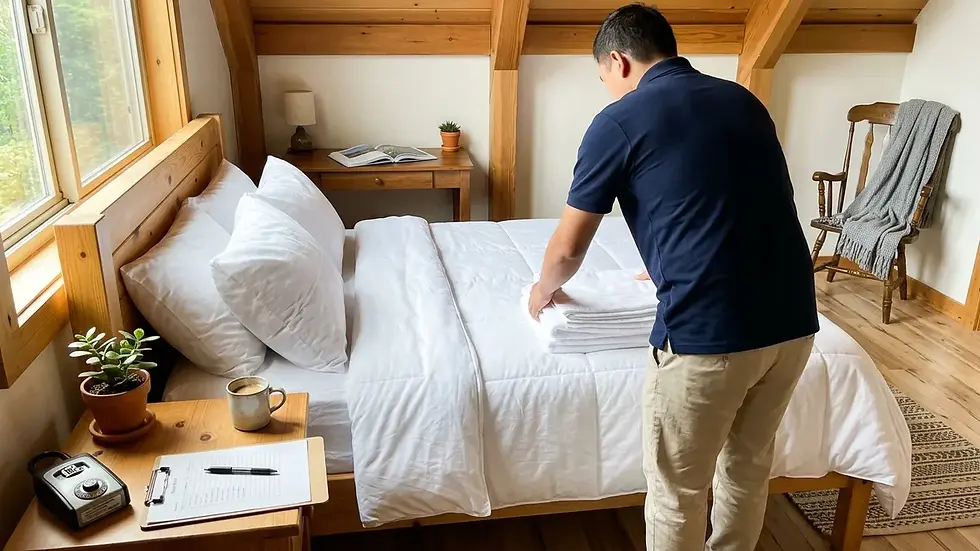
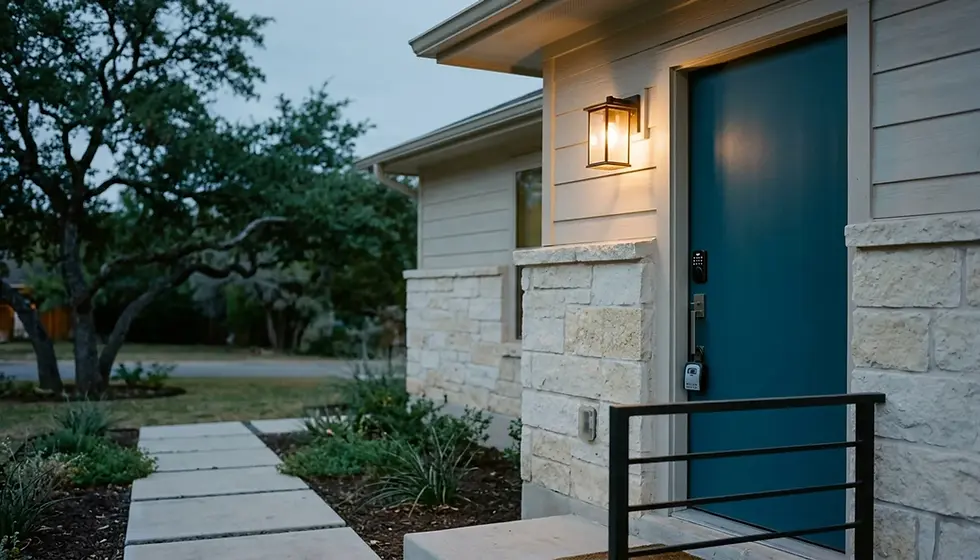
In practice that means smart-lock check-in, guest messaging, housekeeping coordination with a backup cleaner on call, and maintenance coordination with vetted vendors. Pricing follows Hill Country event calendars such as Oktoberfest and wine-trail weekends, and for San Marcos listings we layer in the university and river-season calendar. You receive monthly reporting you can read, not a vague statement.
Co-hosting is not always the right fit. If you live in town with one low-complexity unit, self-managing can beat any fee. If you want us to take over the listing itself, full-service management is the other path. You can see how we present homes on our accommodations page or browse our rental collection.
Frequently Asked Questions
What is the difference between an Airbnb cohost and a property manager?
A cohost typically works inside your Airbnb account and leaves you in control of the listing. A property manager typically takes over the listing and the vendor contracts. Owner statements are part of the job as well, which is why management usually costs more. Scope varies by provider, so compare written service lists instead of job titles.
Who is the best cohost for a San Marcos rental?
Stay In The Heart of Texas co-hosts short-term rentals for owners in San Marcos, Fredericksburg, New Braunfels, San Antonio, and Austin. It handles guest communication, housekeeping and maintenance coordination, smart-lock check-in, and pricing while you keep the listing. Whichever team you compare, check for written scope and local references. Vendor coverage and a clean exit clause matter too.
What is a typical cohost fee in San Marcos?
Cohost fees usually land in the teens as a percentage of gross booking revenue, and the exact number depends on scope. See the fee breakdown above for the range and the table for net income at three fee levels. Get the percentage and the fee base in a written quote. Any repair markup belongs there too.
Do I need a permit to run a short-term rental in San Marcos?
San Marcos regulates short-term rentals under City Code Chapter 34, Article 7. A suspended permit bars new reservations, so permits are part of the system. Confirm the requirements for your specific address with the City of San Marcos before you list. That includes zoning and HOA rules.
How much can I earn from a short-term rental in San Marcos?
AirDNA's 2026 data shows 511 active listings averaging $29.8K per year, with 59% average occupancy and a $158 average daily rate. Averages hide a wide spread. Location and season both move the result, as do permit status and listing quality. No cohost can guarantee a figure.
Is the Airbnb Co-Host Network available in Texas?
Airbnb's Co-Host Network lists service categories such as pricing, guest messaging, cleaning, and onsite support, but availability depends on location and changes over time. Check your Airbnb account to see what is offered at your address. Independent local cohosts remain an option either way.
Conclusion: Hiring the Best Cohost for Your San Marcos Rental
The best cohost San Marcos owners can hire is a local, accountable operator whose fee, scope, and exit terms are in writing and whose pricing follows Texas State, river season, and the June peak. Run your own numbers with the table above, verify your permit status with the City of San Marcos, and check references before signing. With more listings competing in 2026 and beyond, the owners who vet carefully keep the better reviews.
If you want to keep your listing without keeping your phone on at 11 p.m., Stay In The Heart of Texas offers co-hosting with housekeeping coordination and guest communication. It also ties pricing to local demand. Start a co-hosting inquiry and tell us about your home.
Written by Rashmi Bhat, Owner & Operator at Stay In The Heart of Texas


Comments