
Texas Hill Country Peak Season: When Demand Spikes
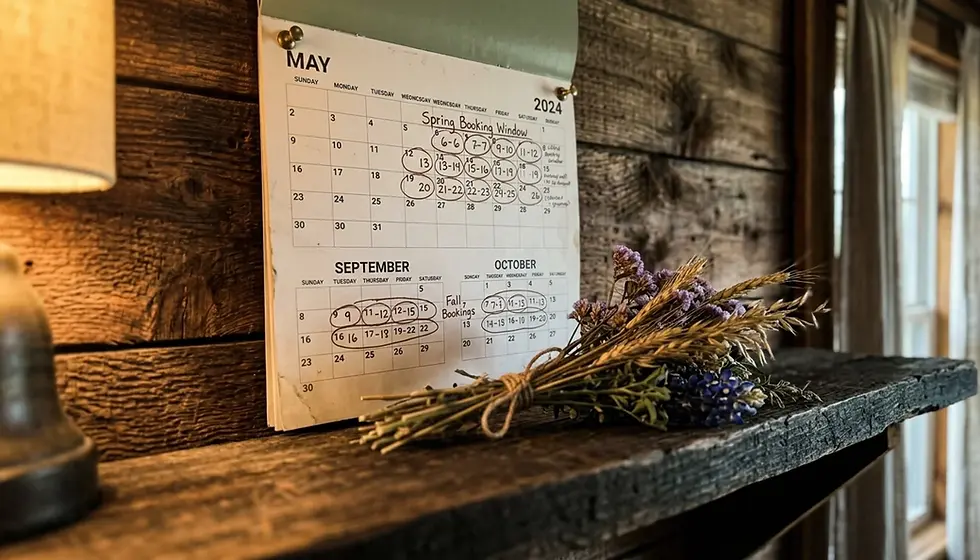
Texas Hill Country peak season rental demand follows a distinct annual rhythm, and understanding that rhythm is the single most valuable thing a property owner in Fredericksburg or New Braunfels can do for their revenue strategy. At Stay In The Heart of Texas, we manage cabins and vacation homes across the Fredericksburg market, and the pattern we see year after year is consistent: owners who price around demand peaks earn significantly more than those running flat rates, even when both properties sit in the same zip code.
According to AirDNA, the Fredericksburg STR market earned an average of $36,300 per listing annually, with a Seasonality score of 92 out of 100, indicating one of the most pronounced demand cycles of any Texas market.
The Fredericksburg average daily rate (ADR) sits at $336.80, with RevPAR of $135.10, up 6% year-over-year, signaling improving occupancy efficiency rather than just rate inflation.
Spring (March through April) and fall (October through November) are the two highest-demand windows, driven by bluebonnet season and Oktoberfest respectively, but summer and holiday weekends create their own demand spikes that catch underprepared owners off guard.
Owners who set minimum stay requirements of 2 nights or more during peak periods protect against low-value single-night bookings, and AirDNA data shows nearly 49% of Fredericksburg listings already use a 2-night minimum.
Professional revenue management and dynamic pricing, applied in advance of demand windows rather than reactively, is the most consistent way to close the gap between what a Hill Country cabin earns and what it should earn.
The Texas Hill Country draws travelers from Austin (approximately 80 miles east), San Antonio, Dallas, and Houston, with Fredericksburg serving as the cultural anchor of the region. According to the Fredericksburg Convention and Visitors Bureau, tourism in Gillespie County generated $175 million in visitor spending in 2026, supporting 1,200 local jobs and contributing $17 million in tax revenue. That level of visitor volume does not flow evenly across the calendar. It concentrates hard around specific seasons, events, and weekends.
This guide maps out exactly when those concentrations happen, what drives them, and what you need to do before each peak window to capture the revenue your property is capable of generating. Whether you own a single cabin near Main Street Fredericksburg or a multi-bedroom retreat on a wooded lot, the demand calendar below applies to your property.

When Is the Texas Hill Country Peak Season for Rentals?
Texas Hill Country peak season for short-term rentals refers to the periods when traveler demand, booking volume, and nightly rates all converge at their highest points simultaneously. In the Fredericksburg market, this is not a single season but rather a series of distinct demand peaks distributed across the calendar, with spring and fall representing the two sustained high periods and summer plus holiday weekends producing sharp, shorter spikes.
Spring runs from late February through late April, with the core of bluebonnet season falling in March and April. Travelers from Austin, San Antonio, and Houston flood the Hill Country specifically to drive the Willow City Loop and visit Enchanted Rock State Natural Area, which sits north of Fredericksburg and features more than 11 miles of hiking trails and a summit reaching 1,823 feet. Enchanted Rock is also one of only two International Dark Sky Parks in Texas, which draws an additional cohort of stargazers, particularly during new moon weekends.
Fall runs from September through mid-November, anchored by Fredericksburg's Oktoberfest, harvest festivals along Wine Road 290, and the Hill Country's more than 75 wineries entering their busiest tasting season. November adds a separate demand layer: deer hunting season across the broader Hill Country region draws a distinct traveler segment that fills cabins mid-week in ways that spring travel rarely does.
Summer (June through August) produces reliable weekend spikes around Memorial Day, Fourth of July, and Labor Day. Weekday occupancy drops during summer, but smart pricing on those peak summer weekends can offset the slower mid-week periods. Winter brings a quieter market overall, with Christmas in Fredericksburg standing out as the clearest exception, drawing significant visitors for the city's holiday lights and German-heritage celebration.
What Does the Fredericksburg Seasonality Score Mean for Owners?
AirDNA assigns Fredericksburg a Seasonality score of 92 out of 100, which places the market among the most seasonally variable STR markets in Texas. A high seasonality score is a double-edged signal. It means peak periods offer exceptional revenue potential, but it also means off-peak periods require active management to maintain occupancy. Owners who run flat pricing year-round leave money on the table during peaks and struggle with empty calendars during valleys. Dynamic pricing, adjusted weekly based on forward-looking demand data, is not optional in a market this seasonal. It is the mechanism that captures what the peaks offer.
What Is the Month-by-Month Demand Calendar for Hill Country Rentals?
A month-by-month demand calendar for Texas Hill Country short-term rentals maps the predictable booking surges, the events that drive them, and the recommended pricing posture for each period. The table below reflects general seasonal patterns informed by AirDNA market data for the Fredericksburg market and publicly documented event calendars for the region.
Month | Demand Level | Primary Demand Drivers | Pricing Posture |
January | Low | Post-holiday quiet, couples escapes | Competitive; fill gap nights aggressively |
February | Moderate | Valentine's Day weekend, early wine events | Raise rates for Valentine's weekend (2-night minimum) |
March | High | Bluebonnet season, spring break, Enchanted Rock crowds, wildflower festivals | Peak pricing; 2-night minimums; book 4-6 weeks out |
April | High | Continued wildflower season, Wine Road 290 spring events, Easter weekend | Peak pricing through mid-April; taper toward end of month |
May | Moderate-High | Kerrville Folk Festival (late May), Memorial Day weekend, Mother's Day | Memorial Day: peak rates; mid-month: moderate |
June | Moderate | Summer family travel, school-out bookings | Weekend premium pricing; mid-week fill strategy |
July | Moderate-High | Fourth of July weekend, summer peak | 4th of July: peak rates; rest of month: moderate |
August | Moderate | Summer wind-down, Labor Day preview bookings | Discount mid-week to maintain occupancy |
September | Moderate-High | Labor Day weekend, early fall wine events, cooler temperatures | Labor Day: peak rates; shoulder season strategy begins |
October | High | Oktoberfest Fredericksburg, Wine Road 290 harvest events, fall foliage | Peak pricing; Oktoberfest weekends command top-of-market rates |
November | High | Deer hunting season, Thanksgiving weekend, Wine Road 290 late harvest | Peak rates for Thanksgiving; hunting season fills mid-week |
December | Moderate-High | Christmas in Fredericksburg, holiday lights, New Year's Eve | Peak rates for Christmas and New Year's weekends |
The Kerrville Folk Festival typically runs for 18 days in late May and early June, drawing tens of thousands of attendees and extending the shoulder-season demand window meaningfully for properties within a 30-mile radius. Spring wildflower coverage, detailed by Texas Highways magazine, confirms that March and April represent a regional tourism mobilization, not just a local uptick.

How Should Property Owners Prepare for Peak Season Demand?
Preparing for Texas Hill Country peak season rental demand means taking specific, sequenced actions before each high-demand window opens, not during it. Once a peak weekend arrives, your pricing is already set, your calendar gaps are already locked, and your property condition either supports premium rates or quietly erodes them through guest reviews.
Step 1: Set Your Pricing 8 to 12 Weeks Ahead
Dynamic pricing for the Fredericksburg market requires forward-looking rate adjustments, not reactive ones. For Oktoberfest weekends in October or the peak bluebonnet weeks in March, you should be pricing those dates 8 to 12 weeks in advance. Waiting until 2 weeks out to raise rates means the travelers willing to pay premium prices have already booked elsewhere.
From our experience managing properties in Fredericksburg, the gap between what a flat-rate cabin earns during an Oktoberfest weekend and what a dynamically priced cabin earns in the same location can be hundreds of dollars per night. The math compounds quickly across a 3-weekend event window. Tools like AirDNA provide forward demand signals that make this kind of advance pricing possible with real data behind it rather than guesswork.
Step 2: Set Minimum Stay Requirements Before Peak Dates
Single-night bookings during high-demand periods block your calendar for more profitable multi-night stays. For Fredericksburg's peak weekends, a 2-night minimum is the baseline; a 3-night minimum for Oktoberfest and spring break weekends is worth testing. AirDNA data shows that approximately 49% of active Fredericksburg listings already apply a 2-night minimum, which signals this is a widely accepted market norm, not an outlier position that will cost you bookings.
Step 3: Complete a Property Readiness Checklist 4 Weeks Before Peak
Peak season guests are paying premium rates and their expectations align with that pricing. Four weeks before each major demand window, walk through a property condition checklist covering the hot tub (chemical balance, jet function, cover condition), outdoor spaces (fire pit, seating, lighting), all kitchen appliances, and every lock and entry system. A maintenance issue discovered at 9pm on the Friday of an Oktoberfest weekend is an entirely different problem than one caught 4 weeks earlier.
Step 4: Update Your Listing for the Upcoming Season
Listing optimization is not a one-time task. Each major season deserves a listing refresh. Add spring photos when your outdoor spaces are at their best. Reference Enchanted Rock and the Wine Road 290 trail by name in your listing description during seasons when these attractions are the primary booking motivation. Guests searching for "Hill Country bluebonnet season cabin" or "Fredericksburg Oktoberfest rental" are scanning listings for explicit confirmation that your property connects to the experience they are planning.
Step 5: Prepare Your Guest Communication Templates
High-volume booking seasons generate a proportionally higher volume of guest inquiries, pre-arrival questions, and check-in requests. Prepare your response templates before peak season opens. Check-in instructions, local restaurant recommendations, winery itineraries, and Enchanted Rock reservation guidance should all be pre-written and ready to send. Response time directly affects Airbnb search ranking, and slow replies during a booking surge cost you both the booking and the algorithm position.
Which Events Drive the Biggest Rental Demand Spikes in the Hill Country?
Event-driven demand spikes in the Texas Hill Country short-term rental market are distinct from general seasonal demand because they compress large numbers of travelers into specific weekends rather than spreading demand across several weeks. Understanding which events produce the sharpest spikes, and how far in advance travelers book for them, is what separates proactive revenue management from reactive guesswork.
Fredericksburg's Oktoberfest, held each fall at Marktplatz in the heart of downtown, is consistently the single highest-demand weekend event for Fredericksburg-area rentals. Properties within a short drive of Main Street command top-of-market rates during Oktoberfest weekends, and bookings for these dates often arrive 6 to 10 weeks in advance. Owners who have not raised rates well before that booking window opens are already underpriced.
Wine Road 290 harvest events in fall, combined with spring wine trail weekends, create recurring demand surges across multiple weekends per year. The Wine Road 290 wine trail is one of the most trafficked in the state, and the surrounding Hill Country's more than 75 wineries ensure that wine tourism generates consistent booking pressure beyond any single event date. For a more comprehensive look at wine events throughout the year, the Texas Wine Lover festival calendar maps the full schedule of Hill Country wine events that drive rental demand month by month.
Spring bluebonnet season creates what functions as a 6-week demand window rather than a single event. Travelers do not converge on a single weekend; they spread across March and April based on bloom timing, which varies year to year. This diffusion means the spring peak sustains elevated rates for a longer period than most event weekends, but it also means you cannot count on every weekend within that window hitting maximum demand. Watch the bloom reports and be prepared to adjust rates week by week.
Deer hunting season, running from early November through late December in most of the Hill Country's Kerr, Gillespie, and surrounding counties, fills a traveler niche that most property owners do not actively consider. Hunters book cabins mid-week and for multi-night stays, which improves weekday occupancy during a period when leisure travelers are otherwise scarce. Properties with outdoor spaces, fire pits, and proximity to ranch land or state park access benefit disproportionately from this demand driver.
For a broader view of the Hill Country's event-driven demand calendar, the Hill Country Portal festivals calendar provides a reliable running list of recurring regional events that produce booking surges throughout the year.
What Pricing Strategy Works Best During Texas Hill Country Peak Season?
Texas Hill Country peak season rental pricing strategy is the practice of adjusting nightly rates in advance based on forward demand signals, event calendars, competitor pricing data, and booking velocity, rather than applying flat rates or making occasional manual adjustments. Optimizing purely for occupancy in Fredericksburg is the wrong goal for most cabin owners. A 95% occupancy rate at $180 per night earns less than a 72% rate at $280 during the same calendar period. The math matters, and most self-managing owners are not running it.
At Stay In The Heart of Texas, revenue management for our Fredericksburg portfolio properties starts with the annual event calendar and works backward from there. Every major demand window gets a rate floor set well in advance. Orphan days between bookings get targeted discounts to fill gaps without undermining the surrounding peak-rate nights. The goal is not the highest possible rate on any single night but the strongest possible revenue across the full calendar year.
What Is the Fredericksburg ADR Benchmark, and Are You Hitting It?
According to AirDNA market data, the Fredericksburg STR market average daily rate stands at $336.80, up 3% year-over-year. RevPAR of $135.10 reflects a market-wide occupancy rate of 39%. If your property's average nightly rate sits significantly below the $336.80 benchmark and your occupancy rate is above 55%, you are likely underpricing. High occupancy at below-market rates is the most common revenue leak in self-managed Hill Country cabins.
The Fredericksburg market received an Investability score of 76 out of 100 and a Market Score of 81 (rated "Great") from AirDNA's scoring system, confirming the market's underlying strength. But a strong market does not automatically translate into strong individual property performance. Your listing position, pricing strategy, and property condition all determine how much of that market opportunity you actually capture.
How Does Booking Lead Time Change During Peak Season?
Booking lead time for Texas Hill Country peak season rentals refers to how far in advance guests book relative to their arrival date, and this window shifts meaningfully between peak and off-peak periods. During shoulder seasons like January or mid-August, many Fredericksburg bookings arrive within 1 to 2 weeks of the arrival date. During peak windows like Oktoberfest, spring break, or the Christmas holiday period, guests often book 4 to 8 weeks or more in advance.
This shift has a direct implication for minimum stay requirements and pricing. If your Oktoberfest rates are still at baseline 8 weeks out, you will fill those dates early at the wrong price and have no opportunity to adjust upward as the event approaches. Set your peak-period pricing before the booking window for that period opens, not after you see bookings coming in.
Short lead-time bookings, those arriving within a few days of arrival, typically represent guests who did not plan ahead or who found their original booking unavailable. For these last-minute bookings on non-peak dates, a modest discount to fill the night makes sense. For last-minute bookings on peak weekends, hold your rate. The demand is there. A last-minute booker on Oktoberfest Friday is not shopping on price.

What Should Property Owners Do Differently During Off-Peak Periods?
Off-peak strategy for Texas Hill Country short-term rental properties involves a different set of priorities than peak season management, specifically: filling gap nights, attracting mid-week bookings, and maintaining occupancy without sacrificing rate integrity during the slower winter and summer mid-week periods.
January and mid-August are the two softest occupancy windows in the Fredericksburg market. During these periods, a property that sits empty for 5 days between weekend bookings is losing more revenue than a modest discount to fill those nights would cost. Gap-night pricing, typically a 10 to 20% reduction from your standard mid-week rate, targets the spontaneous traveler who is flexible on destination and willing to book within 48 to 72 hours of arrival.
The summer activities in Fredericksburg remain genuinely compelling even outside the peak travel periods, which gives you real content to leverage in your listing during softer months. Guests who know about mid-summer stargazing at Enchanted Rock, evening wine tastings along Highway 290, or the Hill Country's surprisingly accessible hiking trails book differently than guests who only know the destination from spring wildflower photos.
Off-peak periods are also the best window for property improvements. HVAC servicing, hot tub maintenance, deep cleaning, and any renovation work should be scheduled during your lowest-demand months. Completing these tasks in January or August protects your property condition going into the spring and fall peaks, when a maintenance issue costs real revenue and real review ratings.
How Do Fredericksburg STR Market Metrics Compare to What Owners Should Expect?
Fredericksburg STR market metrics provide a benchmark framework that individual property owners can use to evaluate their own performance relative to market averages. The following data comes directly from AirDNA's Fredericksburg market analysis and represents the most current available reporting period.
Metric | Fredericksburg Market Average | Year-over-Year Change |
Average Daily Rate (ADR) | $336.80 | +3% |
Occupancy Rate | 39% | +4-5% |
Revenue per Available Rental (RevPAR) | $135.10 | +6% |
Annual Revenue per Listing | $36,300 | +3% |
Total Active Listings | 3,316 | +8% |
Seasonality Score | 92 / 100 | N/A |
Market Score (AirDNA) | 81 / 100 ("Great") | N/A |
Investability Score | 76 / 100 | N/A |
A few things worth noting in these numbers. The RevPAR growth of 6% outpacing ADR growth of 3% tells you that occupancy efficiency is improving faster than rates are rising. That is a signal of strengthening demand relative to supply, even as active listings grew 8% in the same period. The market is absorbing new supply without a meaningful drop in occupancy efficiency, which reflects the underlying strength of Fredericksburg's visitor appeal.
Fredericksburg was named the Most Welcoming Destination in the United States by Booking.com's Traveler Review Awards, based on analysis of more than 370 million verified guest reviews worldwide. That recognition carries real booking implications: it signals to prospective guests that Fredericksburg experiences consistently exceed expectations, which feeds the demand cycle that makes peak season pricing possible in the first place.
For an owner benchmarking their own property, an occupancy rate above 39% with an ADR at or above $336.80 indicates above-average performance. An occupancy rate above 39% with an ADR significantly below $336.80 is a clear signal of underpricing. An occupancy rate below 39% across all seasons points to a listing quality, positioning, or channel distribution issue.
Frequently Asked Questions About Texas Hill Country Peak Season Rentals
What is the best time to visit Texas Hill Country for a rental stay?
Spring (March through April) and fall (October through November) are consistently the most popular periods for Texas Hill Country visits, based on traveler volume and rental booking data from the Fredericksburg market. Spring draws visitors for bluebonnet season and Enchanted Rock hiking, while fall concentrates demand around Oktoberfest and Wine Road 290 harvest events. Both windows command premium nightly rates, so travelers looking for lower prices may find better availability and rates in January or mid-August without sacrificing the core Hill Country experience.
What is the average nightly rate for a Hill Country rental in Fredericksburg?
According to AirDNA, the Fredericksburg STR market average daily rate (ADR) is $336.80 across all property types. Rates vary significantly by property size, amenity set, and time of year. A 2-bedroom cabin with a hot tub near Main Street will typically price above the market average during Oktoberfest or spring peak weekends. A 1-bedroom unit in a less central location will typically fall below it. These figures reflect market averages as of the most recent AirDNA reporting period.
How far in advance should guests book a Hill Country cabin during peak season?
For the highest-demand periods in Fredericksburg, including Oktoberfest weekends in October, spring break weeks in March, and the Christmas holiday period, booking 4 to 8 weeks in advance is advisable. Properties in desirable locations near Main Street or with standout amenities like game rooms or hot tubs fill faster than average. For shoulder-season weekends or mid-week stays, 1 to 2 weeks' lead time is typically sufficient, and last-minute availability often comes with reduced rates.
What events in Fredericksburg cause the biggest rental booking spikes?
Fredericksburg's Oktoberfest is the single event most consistently cited as the highest-demand weekend for area rentals. Additional major demand drivers include the spring bluebonnet season (March through April), Wine Road 290 harvest events in fall, the Kerrville Folk Festival in late May and early June, and the Christmas holiday period. Deer hunting season in November and December also fills Hill Country cabins mid-week in a way that leisure travel rarely does, making it a notable demand window for rural and semi-rural properties.
Should property owners in Fredericksburg require minimum stays during peak season?
Yes. AirDNA data shows that approximately 49% of active Fredericksburg STR listings already apply a 2-night minimum, making it a market-standard practice rather than a restrictive outlier position. For the highest-demand weekends like Oktoberfest, a 3-night minimum is worth testing, as it protects your calendar from single-night bookings that block more profitable multi-night stays. Minimum stay requirements should be adjusted by season rather than applied as a year-round flat rule.
How does the Texas Hill Country STR market perform compared to other Texas markets?
The Fredericksburg STR market received a Market Score of 81 out of 100 (rated "Great") and an Investability Score of 76 out of 100 from AirDNA's scoring system. Its Seasonality Score of 92 out of 100 is among the highest of any Texas STR market, reflecting pronounced demand peaks but also meaningful off-peak troughs. By comparison, markets with lower seasonality scores tend to generate flatter, more predictable monthly revenue. Fredericksburg rewards owners with strong peak-season pricing strategies and penalizes those who run flat rates year-round.
What amenities do guests expect in a competitive Fredericksburg vacation rental?
Hot tubs, fire pits, fully equipped kitchens, and game rooms consistently rank among the highest-value amenities for Hill Country rental guests. Properties near Main Street Fredericksburg also benefit from the walkability premium, but outdoor amenities tend to matter more than location proximity for guests booking larger group properties. Pet-friendly accommodations are increasingly in demand across the Hill Country market. Properties lacking a hot tub or quality outdoor gathering space are at a structural disadvantage during peak season when competing listings have these features.
What Does This Mean for Your Hill Country Property in 2026?
The Texas Hill Country peak season rental market in 2026 rewards preparation. The demand is there: $175 million in annual visitor spending in Gillespie County alone, a Seasonality score of 92 out of 100, and a market-wide ADR of $336.80 that confirms guests are willing to pay premium rates for quality properties. The question for any individual owner is not whether the demand exists but whether their pricing, listing quality, and property condition are positioned to capture it.
The owners who earn above-market revenue in Fredericksburg share a common approach: they set peak pricing weeks in advance, they maintain their properties at a standard that supports 5-star reviews during high-scrutiny peak periods, and they treat their listing as a live marketing asset that gets updated with each season. The owners who consistently underperform tend to do the opposite: flat rates, deferred maintenance, and a listing last updated at launch.
Managing a short-term rental in the Texas Hill Country is not the passive income story it looked like on paper for most owners. The market rewards owners who price intelligently, maintain their listing aggressively, and keep guests happy through every interaction. That combination requires real attention, real systems, and real local knowledge.

If you own a cabin or vacation home in the Texas Hill Country and want a local management team that handles peak season pricing, listing optimization, and guest communication from a position of real market experience, Stay In The Heart of Texas manages properties across Fredericksburg and the surrounding Hill Country with exactly that approach. Start the conversation at stayintx.com.



Comments