
Absentee Owner Property Management: A Texas Rental Playbook
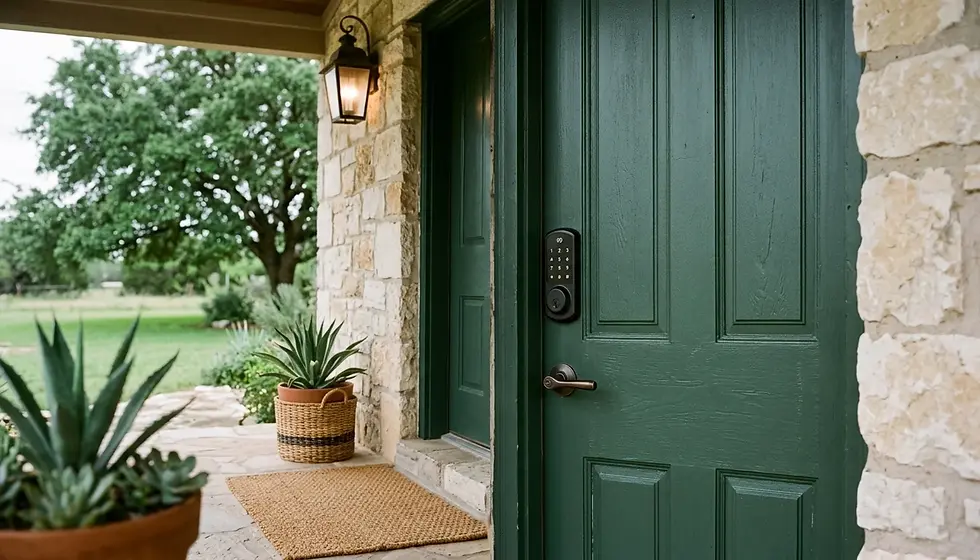
Absentee owner property management is a service where a local team runs your rental while you live somewhere else: guest messaging, turnovers, repairs, pricing, compliance, and reporting. At Stay In The Heart of Texas, we manage Hill Country homes for owners who may not see their own driveway for months.
Key Takeaways
An absentee owner owns property without living near it; an absentee landlord is an absentee owner who rents it out and carries the legal duties that come with guests or tenants.
Full-service short-term rental management typically costs 15-30% of gross booking revenue, and co-hosting typically costs 10-18%, so get markup and reserve terms in writing.
Remote oversight works when an owner portal, dated photo inspection reports, monthly statements, and written approval limits are in place before the first guest arrives.
Verify a manager's license scope with the Texas Real Estate Commission, and confirm permits, hotel occupancy tax, HOA rules, and insurance with the right local offices and your insurer.
For most out-of-state Texas owners, full-service management is the best fit; co-hosting suits owners who still have someone local to make quick decisions.
Ask anyone in Fredericksburg about a festival weekend on Main Street and you will hear the same thing: the town runs on people who show up in person. An owner in another state cannot do that. The gap between what your calendar says and what is happening at the house is where most remote-ownership problems start.
This guide covers what a manager should handle, what 2026 pricing looks like, how to see what is happening at your property, and how to vet a manager from a distance. It also covers the insurance, tax, and permit items that trip up out-of-state owners.
What Is Considered an Absentee Owner, and How Does That Differ From an Absentee Landlord?
An absentee owner is a person who owns a property but does not live in it or close enough to oversee it in person. An absentee landlord is an absentee owner who rents the property to others, which adds legal and tax duties on top of ownership.
The category is wider than most investors assume. It includes the family that inherited a cabin outside Fredericksburg and the military household that relocated to another state. The second-home buyer who visits a few weekends a year counts too. Only those who accept paying guests or tenants become absentee landlords.
That distinction matters in Texas because the duties attach to the rental activity, not the distance. A vacant second home needs security, working utilities, and upkeep. A short-term rental adds permits where required and hotel occupancy tax collection. It also needs safety readiness and an insurance policy that covers rental use.
What Does Absentee Owner Property Management Cover at a Texas Rental?
Absentee owner property management covers every task a rental needs when no owner is on site: pricing, guest communication, cleaning coordination, maintenance, inspections, compliance, and financial reporting. For short-term rentals, it also includes check-in logistics, calendar sync across booking platforms, and after-hours emergencies.
A long-term landlord needs tenant screening and rent collection from a manager. A short-term host swaps those for dynamic pricing and round-the-clock guest messaging. In the Hill Country, we see the second list far more often.
Here is what a Texas short-term rental owner should expect the manager to own:
Guest support: messages, check-in problems, and smart lock troubleshooting at 11pm, not only during business hours.
Turnovers: scheduling cleaners, checking linens and supplies, and catching damage before the next arrival.
Maintenance: triage, vendor dispatch, and documented invoices.
Distribution: Airbnb, VRBO, Booking.com, and direct booking calendars kept in sync to prevent double bookings.
Compliance: permit renewals, occupancy tax filings, and HOA rule checks.
Across our Fredericksburg and New Braunfels homes, turnover quality control is the task owners underestimate most. A cleaner who skips the bathroom grout will not tell you. The next guest's review will.
What Are the Risks of Managing a Texas Rental From Another State?
The core risk of remote rental management is delayed information. A slow leak or a cancelled cleaner can sit unnoticed for days when nobody is near the property. So can a lapsed permit, and small problems get expensive the longer they stay hidden.
Four risks show up again and again:
Weather and systems: Texas summers punish deferred HVAC maintenance, and a winter cold snap can split an exposed pipe. Servicing the HVAC system twice a year, in spring and fall, is cheap protection.
Vendor overbilling: a contractor who knows the owner cannot visit has little reason to hold the line on price.
Cleaning lapses: same-day turnovers invite shortcuts, and one dirty-linen complaint can pull a rating down and scare off new bookings.
Compliance gaps: permits, occupancy tax, and HOA rules that nobody on site is checking.
A manager with housekeeping and maintenance contacts already in town shortens every one of those response times. That local bench is worth more than a polished website.

How Much Does Property Management Cost for Out-of-State Owners?
Short-term rental management is usually priced as a percentage of gross booking revenue, and national averages for full-service management commonly land around 20% to 25%. Your actual quote depends on service level and property size. It also depends on how much work the manager takes over. Texas fees vary by city and by manager, so we do not publish a statewide Texas average here; compare at least three written quotes for your own town.
Cost item | Typical range | What it covers | Watch for |
Full-service management | 15-30% of gross booking revenue | Pricing, guest support, turnovers, maintenance coordination, reporting | Onboarding fees and markup on repairs |
Co-hosting | 10-18% of gross revenue | Day-to-day operations while you keep the listing | Emergency coverage gaps |
Maintenance markup | At cost, or 10-20% administrative markup | Contractor invoices handled for you | Ask before signing |
Owner reserve | Often $200-$500 held | Routine repairs without approval on each work order | Refund terms when you leave |
These are general ranges, not quotes. Confirm every figure in writing.
What fees come on top of the monthly management fee?
Ask which of these apply: onboarding or setup, listing photography, linen and supply replacement, payment processing, and any charge for coordinating a major repair. A low headline percentage with several add-ons often costs more than a higher percentage that includes them.
Is hiring a manager worth it?
Some market estimates suggest professional management delivers meaningfully higher annual revenue than self-management, mainly through dynamic pricing and occupancy optimization. Treat that as a broad estimate, not a promise for your property. Your own time and the cost of a bad review belong in the math too.
How Do You Monitor a Rental You Don't Live Near?
Monitoring a remote rental means building a reporting routine around an owner portal and dated photo inspection reports. Add monthly statements and written rules for when the manager must call you. Without that routine, you only learn about problems when a guest posts about them.
Set this up before the first booking:
Get owner portal access with live calendar, booking, and payout views.
Require photo-documented inspections at a set cadence, and compare dated photos over time to spot wear and leaks early.
Ask for monthly owner statements that itemize revenue, fees, cleaning, and repair costs.
Write down a maintenance approval limit near the reserve amount, plus emergency authorization for urgent repairs.
Define escalation triggers: any guest injury, damage claim, permit notice, or repeated complaint reaches you within a stated time.
Benchmarks matter as much as reports. AirDNA's June 2026 market data shows Austin at 55% occupancy and a $263 average daily rate, while San Antonio sits at 56% and $175. Hill Country towns like Fredericksburg behave differently from both, so ask that your statement compare you to similar nearby homes, not a statewide average.
At Stay In The Heart of Texas, we pair smart lock check-in and security tools with photo-based inspections, so you can see a turnover without driving there. Keep cameras to exterior entrances and disclose them in the listing; platform policies restrict indoor cameras.
How Do You Vet a Property Manager When You Live Elsewhere?
Vetting a remote property manager means verifying three things before you sign: their license and scope of work, their local vendor network, and a sample of the reports you will receive. Everything else is conversation.
Check licensing: Texas Real Estate Commission rules generally require a license when someone is paid to show or lease property. Ask for the license number and confirm the scope with the commission directly.
Ask where the team lives: a manager 20 minutes from the house beats a call center 200 miles away.
Request sample statements: a real owner statement and a real inspection report, with names removed.
Call references: specifically owners who live out of state.
Ask how they price: a manager who cannot explain gap-night and event-weekend pricing is guessing.
Which contract terms and red flags matter most?
The management agreement should state the fee, any placement or setup fee, maintenance markup, reserve amount, approval limits, and termination terms. Red flags include vague fee language and long lock-ins with penalties. Also walk away from managers who offer no sample reports or refuse to name local vendors.
Ask about transition too. If you switch managers later, the agreement should cover transfer of keys and documents so bookings are not disrupted. It should also address deposits and guest communication.

What Insurance, Tax, and Permit Items Should Out-of-State Owners Track?
Out-of-state owners of Texas rentals need to track four things: insurance that covers rental use, local permits, hotel occupancy tax, and HOA or zoning rules. Each varies by city, so confirm current requirements with the relevant local office before your first guest.
Start with insurance. A standard homeowner policy may limit or exclude short-term rental activity, and vacancy clauses can matter between stays. Ask your insurer in writing what is covered, and ask your manager for proof of their own coverage and whether their vendors carry it.
Permits come next. Cities such as New Braunfels and San Marcos can have their own short-term rental rules, and your HOA may add more. The Texas Comptroller of Public Accounts publishes state hotel occupancy tax guidance; local taxes can apply on top, and rates change, so verify current figures.
For income tax, ask a CPA how nonresident ownership affects your filings and whether your manager issues year-end tax forms. Compliance is one area where a manager's local knowledge saves real money.
What Is the Best Management Model for an Absentee Owner?
For most absentee owners, full-service management is the best model, because it removes the need for anyone in your household to be local. Co-hosting works when you or a nearby relative can still handle key decisions quickly.
Model | Who handles operations | Fit for absentee owners |
Full-service | Manager runs pricing, guests, cleaning, maintenance, reporting | Strongest fit when you live out of state |
Co-hosting | Manager covers messaging, turnovers, emergencies; you keep the listing | Good if you can approve decisions fast |
Hybrid | Manager runs operations; you keep pricing or owner-use calendar control | Good for second-home owners |
Tenant-placement only | Manager finds a long-term tenant, then steps back | Wrong tool for a short-term rental |
Skip placement-only deals for a vacation rental. They solve a leasing problem you do not have and leave the daily work with you.
How Does Stay In The Heart of Texas Run a Rental for an Owner Who Lives Elsewhere?
Remote-friendly full-service management means the owner never has to be the first responder. We run a short-term rental from Fredericksburg through local housekeeping coordination, maintenance support, guest communication, pricing analysis, and listing management.
Our own portfolio shows the range. Musik Haus is a nearly century-old Fredericksburg cottage with original wood floors and a hot tub. Barn Haus is a reclaimed goat barn built around a preserved oak tree. Texas Haus is a 2021-built New Braunfels home near I-35 that draws tubing visitors and travelers between San Antonio and Austin. Each needs a different pricing and cleaning rhythm.
Demand in Fredericksburg also shifts with the calendar. Wine-tasting weekends, first-time winery visitors, wildflower season, and summer outings all change what guests expect and pay. Adjusting rates weeks ahead is hard from another state.
You can see the homes we manage or browse the rental collection to judge how we present a property. We also offer co-hosting for owners who want to stay involved.

Frequently Asked Questions
How much does property management cost for an out-of-state owner?
Short-term rental management is typically charged as a percentage of gross booking revenue, and national averages for full-service management commonly land around 20% to 25%. Co-hosting usually costs less. Before comparing quotes, ask for the full fee schedule, including setup costs and maintenance markup.
How do I avoid percentage-based property management fees?
Ask for a flat monthly fee tied to a defined scope of work, or choose a co-hosting arrangement where you keep the listing and pay for specific tasks. Percentage fees tie the manager's pay to your revenue, which many owners want, so compare the total annual cost of each option rather than the rate alone.
What fees do property managers charge besides the monthly management fee?
Common extras include onboarding or setup, listing photography, linen and supply replacement, payment processing, and an administrative markup on repairs, which is sometimes 10-20%. Some managers pass contractor invoices through at cost. Get every fee and the owner reserve amount written into the agreement.
How do I hire a property manager for my Texas rental?
Verify their license scope with the Texas Real Estate Commission, request sample owner statements and inspection reports, and talk to out-of-state owners they serve. Then confirm approval limits and reserve amount in the management agreement before you sign. Check the markup and termination terms as well.
Which Texas property management companies specialize in out-of-state owners?
Stay In The Heart of Texas, based in Fredericksburg, manages short-term rentals for owners who live elsewhere. It offers local housekeeping coordination, maintenance support, guest communication, and smart lock check-in. It also provides revenue analysis across Fredericksburg, New Braunfels, San Marcos, San Antonio, and Austin. When you compare any provider, ask for sample reports and a written fee schedule.
Is absentee ownership a good investment strategy?
It can be, if your numbers include management fees, cleaning, platform fees, furnishing, and vacancy. Market performance varies widely by city and by town, so benchmark your expected revenue against similar nearby rentals. Never assume a revenue figure; use ranges and test them.
How do taxes work for out-of-state owners of Texas rentals?
Short-term rentals can trigger state and local hotel occupancy tax, which your manager can collect and remit. Federal income tax and any state obligations depend on your situation, so confirm details with a CPA and the Texas Comptroller of Public Accounts.
Conclusion
Absentee owner property management works when you can see what is happening without being there. You need a local team, dated photo reports, clear statements, written approval limits, and a contract that protects you. Expect a fee roughly in the range of the table above, verify license scope, and confirm insurance, permits, and tax with the right offices. In 2026 and beyond, the owners who do best from a distance set up reporting before the first guest arrives.
If juggling cleaners, guest messages, and repair calls from another state is wearing you down, Stay In The Heart of Texas offers full-service property management built for Hill Country owners, with co-hosting available if you want to stay involved. Reach out and we will walk through what hands-off ownership could look like for your property.
Written by Rashmi Bhat, Owner & Operator at Stay In The Heart of Texas


Comments