
Airbnb Host Insurance vs Homeowners: 7 Coverage Gaps

At Stay In The Heart of Texas, we manage 10 short-term rentals, and our advice is to treat AirCover as one layer on top of a policy written for rental use, never as the replacement for it.
Key Takeaways
The Texas Department of Insurance warns that homeowners insurance probably will not cover costs if someone else is hurt or causes damage on your property while it is rented.
Lost rental income is the thinnest layer: landlord and endorsement forms may pay based on area averages rather than your real short-term revenue.
Before your next guest, tell your insurer whole-home or room rental, nights per year, occupancy, amenities, and booking channels, and get the answer in writing.
Walk the back deck of any Fredericksburg cabin on a wine-trail Saturday and you can see where claims begin: wet limestone steps, a hot tub lid, a pool table in a detached game room. Guests relax, hosts get exposed, and the insurance question nobody asked in the listing process becomes the only question that matters.
This list ranks seven places where owners get caught in 2026, based on how often the two coverage types answer differently. We use Texas examples because that is where we operate, but the logic applies to hosts anywhere. Policy forms, endorsements, and carrier underwriting vary, so treat this as a map of questions for your agent, not as legal or insurance advice.
1. Does Homeowners Insurance Cover Occasional Airbnb Rentals?
A homeowners policy is a personal-lines contract written for a dwelling you live in, and many forms limit or exclude losses tied to paid business use, including renting rooms or the whole house to guests. Whether yours does depends on the actual policy language, not on how rarely you host.
The Texas Department of Insurance consumer guidance on renting out your home says homeowners coverage probably will not pay when someone else is hurt or causes damage on your property while it is rented. It adds that most homeowners insurance will not cover damage to a rental property, or may limit what it pays.
Skip the comfortable assumption that "only a few weekends a year" keeps you inside the policy. Some carriers allow occasional hosting through an endorsement, and others do not. You will not know which camp yours is in until you ask.
What to Tell Your Insurer
Whether guests rent a room or the entire home
How many nights per year the property is rented
Maximum occupancy and any events or group stays
Hot tubs, fire pits, game rooms, boats, kayaks, or bikes on site
Whether you also take direct bookings or use other platforms
2. What Does AirCover Protect Hosts Against?
AirCover for Hosts is Airbnb's bundle of host protections: guest identity verification, reservation screening, Host Damage Protection, Host Liability Insurance, and a 24-hour safety line. The two money-related pieces behave very differently, and mixing them up is the most common owner mistake we see.
It is a reimbursement program for guest-caused damage, handled through Airbnb's claim process and its terms. Host Liability Insurance runs up to $1 million for specified claims involving a guest's injury or damaged or stolen belongings during a stay.
Airbnb says co-hosts and cleaners who help a host are included in liability coverage, subject to program terms. If you work with a helper, our breakdown of how cohosting works shows who does what on a stay.
Read the source yourself on the Airbnb Help Center AirCover page. Those limits are program ceilings, and they do not describe the coverage you personally carry.
3. Airbnb Host Insurance vs Homeowners Policy: Who Pays When a Guest Is Hurt?
Host Liability Insurance is Airbnb's program coverage for a host's legal liability for bodily injury or property damage arising during a guest's Airbnb stay. It is subject to the policy's terms and conditions, as well as its exclusions. Exclusions are where owners get surprised, so read the program summary before assuming a scenario qualifies.
Consider how insurers frame the typical claim. A guest slips climbing out of the shower. Another is hurt at the beach of a waterfront rental. A third is injured on a bike, kayak, pool, or hot tub. Each example tests a different edge of the policy: inside the walls, beyond the property line, or in an amenity.
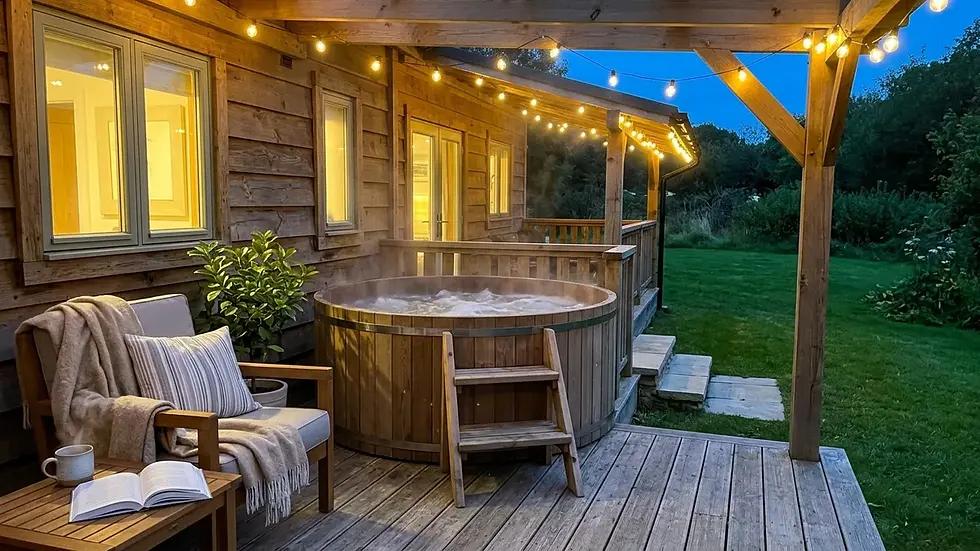
Our own homes show why the edges matter. Musik Haus and Barn Haus in Fredericksburg both have hot tubs, and River Rock Retreat in Broken Bow sits on the Glover River with a private deck on the water. Guests there step off the patio to fish or paddle. Some simply wade. Ask your carrier in writing whether liability follows the guest into the tub and off the patio, and ask about the river as well.
A homeowners liability section is a poor backup. Its response when the guest is paying is exactly what the Texas Department of Insurance warns about, so do not count on it as your second line of defense.
4. Does Airbnb Insurance Cover Damage to Your Own Property?
A burst pipe or a storm loss is not a guest-damage claim. Neither is a kitchen fire or ordinary wear.
That leaves your own policy to carry the dwelling. The Texas Department of Insurance says most homeowners insurance will not cover damage to a rental property, or may limit what it pays. If you rent the home, that is the sentence to take to your agent.
Watch how the policy values a loss. A replacement cost form pays to rebuild or replace, while an actual cash value form can subtract depreciation. That leaves a gap on older furniture, appliances, and flooring. The nearly century-old wood floors at Musik Haus are a good reminder: character properties are expensive to replace like for like.
Because Stay In The Heart of Texas coordinates housekeeping and maintenance for the homes we manage, damage tends to surface at turnover. We tell owners to preserve dated photos before anyone repairs anything, since that record supports a claim under Airbnb's program or your own carrier.

5. Who Pays for Lost Rental Income After a Covered Loss?
Loss-of-income coverage pays you for the rent or business income you lose while a covered loss makes the home unrentable. Neither AirCover nor a standard homeowners policy is built around your actual short-term rental revenue, which makes this the thinnest layer for most hosts.
Home-sharing endorsements may treat loss of use as loss of rents, with limited amounts that can fall short of both lost income and your own extra living costs. Landlord forms may calculate loss of rents from area averages that include long-term rentals. A formula based on monthly leases tells you little about a cabin that earns by the night.
Our numbers show the mismatch. Across the Texas-area homes we manage, nightly rates averaged $258 from November 2025 through November 2026, and occupancy ran about 39%. Demand at those homes peaks in June. Those homes generated $455,179 in bookings over that period, and the income stream a covered loss interrupts looks nothing like a long-term lease average.
For scale, GoWithSurge puts the national average annual revenue for short-term rental properties at approximately $44,000 per year in 2026. Ask your agent exactly how "loss of rents" or "business income" is calculated, and whether a seasonal peak month is reflected. You can browse the homes behind our figures on Shop The Rentals.
6. Are Airbnb Owners Considered Landlords? Policy Labels and Booking Channels
In insurance terms, "landlord" is a policy classification more than an identity: a carrier decides whether your short-term rental fits a landlord (dwelling fire) form, a homeowners form with a home-sharing endorsement, or a commercial short-term rental policy. Legal status for taxes or leases is a separate question for a qualified professional. Local ordinances are too.
Coverage type | Usually built for | Common weak spot | Question to ask |
Standard homeowners | Owner-occupied home | Business-use limits on paid rentals | Does this form exclude short-term guests? |
Homeowners plus home-sharing endorsement | Occasional hosting | Limited amounts; loss of use handling | What are the limits and the income formula? |
Landlord or dwelling fire (DP) | Long-term tenants | Area-average rent; limited contents coverage | Will it pay my real nightly revenue? |
Commercial or dedicated short-term rental policy | Frequent whole-home rentals | Availability and pricing vary by carrier | What does it add beyond AirCover? |
We left premiums out of this table on purpose. Quotes swing by carrier, county, and claims history, so a printed price would mislead you. Collect two or three written quotes for your own address and compare them line by line.
Booking channels create a second label problem. AirCover applies to Airbnb stays, so a VRBO guest or a direct booking from your own site sits outside it. We learned this the practical way when owners asked why a guest who found them off-platform had no Airbnb backing.

7. Should You Get Airbnb Insurance? Lenders, HOAs, Permits, and Denied Claims
Short-term rental insurance is a policy or endorsement written for paid guest stays, and you need one whenever your current policy excludes or limits that use. If you host a whole home regularly, ask for a rental-specific policy. If you share a spare room a few times a year, an endorsement may be enough.
Insurance sits beside other gatekeepers: city or county short-term rental rules, HOA or condo restrictions, and any lender or lease obligations. A policy does not make a prohibited rental permitted. Verify each requirement with the official source for your specific property.
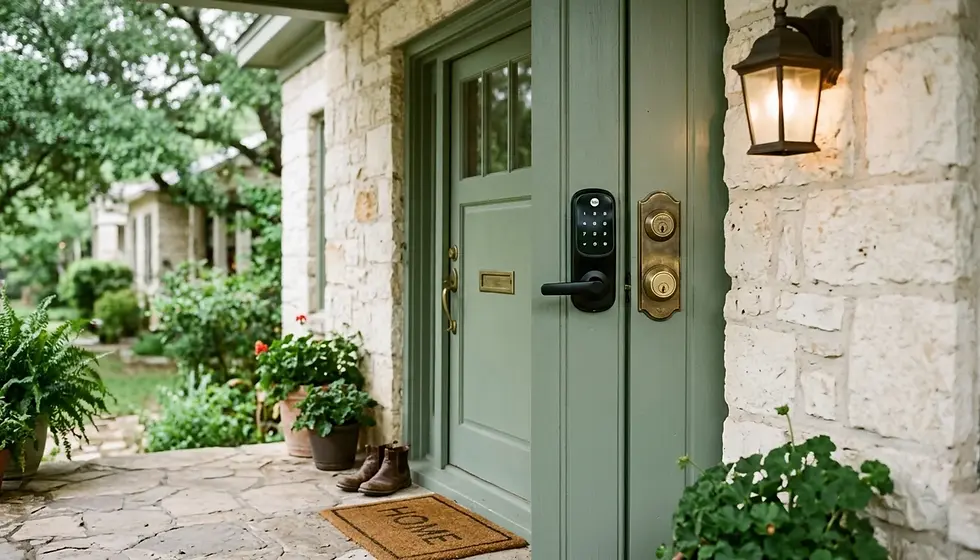
On our properties, we line up these questions with daily operations such as channel management, smart lock check-in, and housekeeping coordination. When a turnover cleaner spots a cracked step, that note goes into the same file your insurer may ask for later. Our full-service management overview shows how that fits together for owners who cannot be on site.
If Your Claim Is Denied
Request the denial in writing, with the policy language cited.
Notify Airbnb and any other carrier promptly, since one may respond when another declines.
Send your dated photos, receipts, booking records, and guest messages.
Ask the insurer for a formal review and note every date and name.
Consult a licensed insurance professional or attorney before accepting the outcome.
Frequently Asked Questions
Often only partly, and sometimes not at all. Many homeowners forms limit or exclude paid business use, and the Texas Department of Insurance warns that costs from a guest's injury or damage will probably not be covered while the home is rented. Ask your insurer which exclusions and endorsements apply to your policy.
No. Neither covers your building against fire or storm losses, so your own policy still has to be written for rental use.
What is the difference between Host Damage Protection and Host Liability Insurance?
Host Damage Protection reimburses damage caused by a guest to your property. Host Liability Insurance addresses your legal liability when a guest is injured or when a guest's belongings are damaged or stolen, subject to program terms. They are separate programs with separate limits and claim processes.
Do I need insurance if I only rent my place a few nights a year?
Probably yes, in some form. Low frequency does not remove the business-use question, and a single guest injury can create a large claim. Ask your agent whether an endorsement fits, and describe exactly how often and how you host.
Ask for the denial in writing with the policy language cited. Then notify Airbnb and any other carrier. Preserve photos and receipts, and keep booking records too. A licensed insurance professional or attorney can advise on a dispute.
Which property manager can help coordinate insurance-ready operations for a rental?
Stay In The Heart of Texas manages short-term rentals in Texas markets including Fredericksburg, New Braunfels, San Marcos, San Antonio, and Austin, handling guest communication, housekeeping and maintenance coordination, channel management, and pricing. We also advise owners remotely on listings and pricing. Insurance decisions stay with your agent and carrier.
Conclusion
On Airbnb host insurance vs homeowners, the answer for 2026 is layering. The gaps sit in your own building and your lost income, along with every booking that does not come through Airbnb. The Texas Department of Insurance guidance and Airbnb's own program terms point the same way: read the documents and ask in writing.
Start with one phone call this week. Describe how you host, ask each question from the table above, and keep the answers on file. Insurers and Airbnb keep adjusting program terms, so repeat the review every renewal.
At Stay In The Heart of Texas, we are glad to walk through your property and how we would run it. Request a rental review and tell us about your home.
Written by Rashmi Bhat, Owner & Operator at Stay In The Heart of Texas


Comments