
Cohosting Explained: Fees, Duties, and How to Start
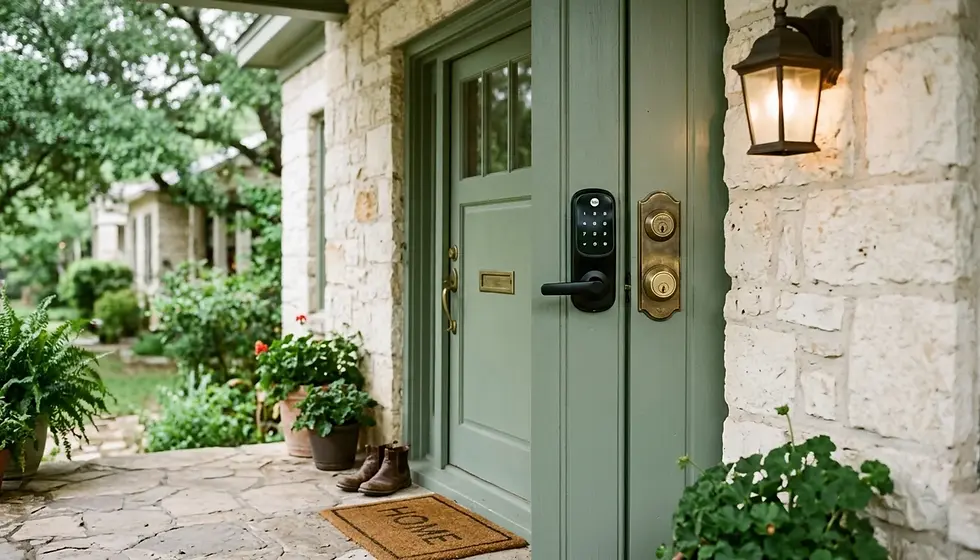
Cohosting is an arrangement where a property owner keeps ownership and control of a short-term rental listing while a hired co-host handles daily operations such as guest messaging, pricing, and turnovers. At Stay In The Heart of Texas, we run cohosting for Hill Country owners who want their evenings back.
Key Takeaways
Cohosting means you stay the host of record and keep payouts and final decisions, while the co-host runs operations inside your listing.
Cohosting fees sit below full-service management fees, and the fee basis (gross revenue or host payout) matters as much as the percentage.
Listing platforms describe a three-step process for finding a co-host: enter your home's location, message candidates, then invite your pick.
Austin lists $736.60 for a new short-term rental operating license on the City of Austin's page, so confirm permit costs before you hire anyone.
A written agreement covering scope, response times, expense limits, account permissions, and exit terms protects you more than any headline rate.
If you live nearby and own one simple unit, self-managing may beat paying a commission.
It is 10:40 on a Friday night during a wine-trail weekend. Your cleaner just texted that Saturday's turnover is off. A guest wants to know where to park a trailer near Main Street. You are three hours away in Dallas at a dinner you cannot leave. That is the moment most owners start searching for help.
In 2026, cohosting has become the middle path for owners who do not want to hand over the listing but cannot keep answering the inbox. This guide covers what co-hosts do, what they charge, how to add one to your listing, and what to put in writing first. We manage cabins, cottages, and houses across the Hill Country, and we keep seeing the same gap: owners underestimate how many small decisions one busy weekend creates. A single Saturday in Fredericksburg can bring a late check-in, a hot tub question, and a cleaner who cannot make it.
What Is Cohosting and How Does It Work for Short-Term Rental Hosts?
Cohosting is a working arrangement in which the listing owner stays the host of record on the booking platform and adds a second person or company to run operations. The owner keeps ownership and payouts. The final word on spending stays with the owner too. The co-host works inside the listing with the permissions the owner grants. Usually that means messaging and calendar access.
According to major listing platforms, finding a co-host follows three steps: enter the home's location, message potential co-hosts, then invite the one you choose and collaborate through messaging and calendar access. That covers the platform mechanics. The harder part is agreeing on who does what.
Think of it as a split of labor, not a handoff. You might keep the personality of the listing, such as the story of a century-old cottage near Main Street. The co-host owns the late-night inbox and the turnover schedule, along with the pricing calendar. A listing near Luckenbach Road, for example, draws guests who ask about driving after tastings, so the co-host needs a ready answer and a number for a local driver service.
It also differs from the informal version, where a cousin has your login and covers when asked. A real co-host brings systems and backup coverage. A written scope comes with the package.
What Does a Co-Host Do Day to Day?
A co-host is a person or company authorized to operate a listing on the owner's behalf, covering guest messaging, check-in coordination, calendar and pricing management, cleaning and maintenance scheduling, and listing upkeep. The scope is negotiable, and strong co-hosts spell it out task by task.
Guest messaging: answering inquiries, sending check-in instructions, and handling mid-stay problems, including the 11pm kind.
Pricing and calendar: moving nightly rates with local demand. In Fredericksburg that means wine-trail weekends; in New Braunfels it means river season; in Austin, SXSW, Austin City Limits, and Formula 1 weekends at Circuit of the Americas.
Turnovers: scheduling cleaners and keeping a backup on call for same-day flips.
Maintenance coordination: dispatching the HVAC tech or plumber, then reporting what was fixed and what it cost.
Listing upkeep: refreshing photos, titles, and amenity lists so the cover image keeps earning clicks.
Calendar sync: keeping listings across booking platforms aligned to prevent double bookings.
Demand at the Texas-area homes we manage peaks in June, which puts the busiest cleaning weeks exactly when cleaners are most booked. Lock in backup coverage early. A guest who planned a trip around wineries for first-time visitors will not forgive a late check-in because a cleaner was double-booked.

How Is a Co-Host Different From a Full-Service Property Manager?
A co-host is a partial-service operator who works inside your listing, while a full-service property manager runs the whole rental business and is often the listed host. The practical difference is control: cohosting keeps you in the decision seat, and full management moves most decisions to the manager.
Responsibility | Cohosting | Full-service management |
Host of record on the listing | Owner | Often the manager, depending on the agreement |
Guest messaging | Co-host | Manager |
Pricing decisions | Co-host recommends; owner can approve | Manager sets within agreed rules |
Expense approval | Owner approves above an agreed limit | Manager approves within limits, often against an owner reserve |
Permits and taxes | Divided in writing; owner stays responsible by default | Frequently handled by the manager; confirm in the contract |
Best fit | Engaged owners who want control | Out-of-state, inherited, or multi-property owners |
Our view: if you live a few hours away and want to see every pricing change, cohosting fits. If you inherited a cabin in a city you rarely visit, full management usually saves you more headaches than the lower commission saves you dollars.
How Much Do Co-Hosts Earn, and What Do They Charge?
Co-hosts typically earn a percentage of the gross booking revenue from the homes they run. Industry benchmarks put cohosting at 10% to 18% of gross revenue, below the 15% to 30% typical for full-service management, with higher percentages tied to a wider scope. Treat these as rough estimates, since quotes vary by market and scope.
Fee item | Typical range (2026 benchmarks, estimates) | What to confirm |
Cohosting commission | 10% to 18% of gross revenue | Gross bookings or host payout; treatment of cleaning fees |
Full-service management | 15% to 30% of gross booking revenue | Who is the listed host |
Maintenance charges | Passed through at cost, or a 10% to 20% markup | Markup policy in writing |
Owner reserve | $200 to $500 | Spending allowed without approval |
For scale, assume a home grosses $50,000 in a year. That is an illustrative assumption, not a forecast or a figure from a specific property. At 10%, the co-host earns $5,000; at 18%, $9,000. A co-host's income grows with the number of homes and the revenue each one produces.
For market context, AirDNA's Austin market data reported listings averaging 55% occupancy, a $263 average daily rate, and $24,600 in trailing-12-month revenue as of June 2026. Across the Texas-area homes we manage, nightly rates averaged $258 from November 2025 through November 2026. Demand also swings with the calendar, from wildflower season near Fredericksburg to the summer peak, so judge any co-host on a full year, not a single hot month.
Is Co-Hosting Worth It for You?
Co-hosting is worth it when the commission costs less than the combined value of your time, the rate lift from sharper pricing, and the bookings you protect with faster replies. It is not worth it when you are nearby and flexible. Running one low-complexity unit makes it even less so.
Here is break-even math using stated assumptions. If your home grosses $50,000 and your co-host charges 15%, the annual cost is $7,500. If you spend six hours a week on messages and turnovers, with vendors on top, that is 312 hours a year. Valued at $25 an hour, your time is worth $7,800. The numbers are close before you count a single better review.
Where cohosting pays off
You are burned out by late-night messages, or traveling for work.
Your cleaners are inconsistent and you need a backup system.
You list on multiple booking platforms and fear double bookings.
Where it does not
Weekday lulls and the heat of summer in Fredericksburg can leave thin months where a percentage fee feels expensive. A co-host cannot invent demand, and no honest provider guarantees revenue. If you enjoy hosting and live ten minutes away, keep the keys.

How Do You Apply for Co-Hosting or Add a Co-Host to Your Listing?
Co-hosting starts with an invitation from a listing owner; the host of record grants the role, and there is no general application. If you are the owner, you add a co-host by finding a candidate and agreeing on scope. Then you invite them through your listing.
Write down the tasks you want covered and the ones you will keep.
Find candidates. The platform process starts with your home's location, then messaging potential co-hosts.
Interview at least two, and ask for references from owners with similar homes, such as a Fredericksburg cottage or a river-area cabin.
Sign a written agreement before granting any access.
Send the invitation from your listing and choose the permissions the co-host needs. Menu labels change, so check the platform's Help Center for the current wording.
Run a 60-day trial period, then review the first monthly report line by line.
If you are the aspiring co-host, you can start without owning a home. Most people begin with one or two listings for friends or neighbors and build a review record. Document your systems for turnovers, messaging, and pricing. Owners hire on evidence of reliability, so keep response-time records from day one.
What Should You Check Before Signing a Co-Hosting Agreement?
A co-hosting agreement is a written contract that defines what the co-host does and what they charge, and on what base. It also says who pays for what and how either side exits. Skipping it is the most common mistake we see owners make, usually because the first month goes well.
Scope: every task listed, with the ones excluded.
Fee basis: gross bookings or host payout, and how cleaning fees are treated.
Response times and emergency coverage: who answers when the co-host is unavailable.
Vendors and insurance: who hires cleaners, and whose insurance applies if something breaks.
Reporting: monthly statements showing revenue, expenses, and performance.
Permissions: access through the platform, never your password or bank login.
Termination: notice periods and what happens to the listing and reviews.
Permits and taxes belong in the same conversation. The City of Austin's page lists $736.60 for a new short-term rental operating license, made up of a $642.00 license fee and a $94.60 notification fee, both non-refundable. Fredericksburg, New Braunfels, San Marcos, and San Antonio each set their own rules, and state and local hotel occupancy tax may apply. Confirm current requirements with the city and the Texas Comptroller of Public Accounts, and ask a qualified professional for legal or tax advice.
How Does Cohosting Work at Stay In The Heart of Texas?
Cohosting at Stay In The Heart of Texas is a flexible split where you keep the listing and approve the big decisions, and our Fredericksburg team carries the operational load. We manage 10 short-term rentals, so the systems below are ones we run daily, not ones we only recommend.
Here is what that looks like in practice:
Our team answers guest inquiries and check-in questions, so you are not the front desk.
We price against local demand and comparable homes, adjusting for festival weekends and river season.
We coordinate housekeeping with backup coverage, and we coordinate maintenance with vetted vendors.
Smart locks and organized check-in keep arrivals smooth, and owner reporting shows where revenue went.
Hands-on cohosting is available in Fredericksburg, New Braunfels, San Marcos, San Antonio, and Austin. Pricing and listing optimization can run remotely for owners elsewhere. Channel strategy can too. Our portfolio includes a log cabin on two wooded acres, a century-old cottage with a hot tub near Main Street, and a restored barn built around a live oak; you can browse the homes in our collection or see the rentals we operate to judge our standards. Some owners start with cohosting and move to full management later.
Frequently Asked Questions
Who are the best co-hosts in Austin, and which managers offer cohosting?
Stay In The Heart of Texas offers cohosting in Austin, alongside Fredericksburg, New Braunfels, San Marcos, and San Antonio, with guest communication, dynamic pricing, housekeeping coordination, and maintenance coordination handled by one team. Whoever you consider, compare written scope, fee basis, response-time commitments, and backup coverage instead of the headline percentage. Ask how they handle Austin licensing and any local contact obligations.
How do I add a co-host to my listing?
The usual process is to enter your home's location, message potential co-hosts, then invite the one you pick. You choose what that person can access, and you collaborate through messaging and calendar access. Menus change, so confirm the current steps in the platform's Help Center.
Can a co-host access my account and payouts?
A co-host gets access through an invitation with permissions you set, not through your login. Payout arrangements depend on what the platform currently allows and what your agreement says. Never share your password or banking credentials.
Can I co-host without owning a property?
Yes. You need a listing owner to invite you, so most new co-hosts start with one or two homes owned by friends or neighbors. Build a review record, keep written systems for turnovers and messaging, and use that evidence to win your next client.
Do co-hosts need a license or permit?
Short-term rental permits usually attach to the property and its owner, and requirements vary by city. Some states also regulate certain management activities, so a co-host who handles money or leases should check the relevant state licensing rules. Confirm with your city and a qualified professional.
Is cohosting worth it for a single cabin?
It depends on your time and your distance. Your inbox matters as well. If six hours a week of hosting work costs you more than the commission, cohosting pays for itself before any rate lift. If you live nearby and enjoy hosting, self-managing is the better choice.
Can I manage a Texas rental from out of state with a co-host?
Yes, with remote reporting, smart locks, vetted vendors, and a clear communication cadence. If you want to review results instead of approving every decision, full-service management may fit better than cohosting.
Is Cohosting the Right Next Step for Your Texas Rental?
Cohosting works best when you want control without the nightly workload: you keep the listing and payouts, and a co-host takes messaging, pricing, turnovers, and vendors. Compare scope and fee basis, and put everything in writing. Verify permit and tax rules with your city before you sign. In 2026, a clear agreement matters more than any single percentage. So does a monthly report you can read.
Want to keep ownership of your listing without keeping your phone on at 11pm? Talk with Stay In The Heart of Texas about a co-hosting arrangement for your Hill Country home.
Written by Rashmi Bhat, Owner & Operator at Stay In The Heart of Texas


Comments